From your Google search to your reception, without intermediaries.
Sustained growth in qualified traffic
SEO attracts travelers with high booking intent: people searching for terms like “boutique hotel in Cartagena historic center” or “romantic hotel in Medellín Poblado.” This organic traffic grows over time, does not depend on constant ad spend, and generates revenue at an almost negligible marginal cost.
Lower cost per acquisition
While OTAs charge between 15% and 25% per reservation, SEO drastically reduces CPA and improves the margin per room sold. This frees up cash flow and allows reinvestment in operational improvements or more strategic campaigns.
Greater control over the guest experience
By capturing direct bookings, the hotel obtains data that never arrives when reservations come via an OTA. This makes it easier to activate automations, increase average ticket through upselling, and strengthen guest recurrence.
Stronger competitive position against chains and OTAs
A boutique hotel does not necessarily compete on budget, but on relevance, content, reputation and local positioning. SEO allows you to stand out in saturated markets without depending on constant ad spend.
Long-term stability
Unlike SEM or social ads—whose costs tend to rise with demand—SEO compounds over time: the more relevant content the hotel publishes, the more authority the domain gains and the better it ranks. This produces natural increases in direct bookings throughout the year.
How an SEO strategy designed for boutique hotels works
Investment and expected return
Doubling direct bookings in 12 months is a realistic goal if you execute a disciplined SEO plan with constant measurement. In most boutique hotels:
- First visible results appear between months 3 and 4
- Organic traffic accelerates between months 6 and 9
- Strong impact on bookings occurs between months 9 and 12
When SEO is combined with SEM campaigns, brand-defense, metasearch and automation, the hotel can achieve ROAS between 5x and 12x, depending on destination and season.
Keyword research with booking intent
Hotel SEO is not about writing generic articles. It’s about identifying how travelers actually search:
- “boutique hotel in Bogotá near Zona G”
- “hotel in Cartagena with rooftop and ocean view”
- “best hotel for couples in Mexico City”
- “hotel in Miami with beach access”
The strategy must prioritize transactional searches that actually convert into bookings.
Website and booking engine optimization
A slow or poorly structured website can reduce conversion by up to 40%.
Key aspects include:
- Clear, SEO-oriented site architecture
- Optimized photos without compromising speed
- Helpful copy that answers real traveler questions
- Seamless integration with the booking engine
- CRO (conversion rate optimization) on buttons and forms
Google brings the traffic. The website must convert it.
High-value, destination-focused content
For boutique hotels, content about experiences and location is decisive. Examples:
- “What to do in Medellín if you’re staying in El Poblado”
- “The best romantic plans in Cartagena”
- “Beach guide near Miami Beach”
This type of content positions the hotel as a local expert, increases credibility and strengthens its presence in informational searches, which feed the direct-booking funnel.
Authority signals: links, reputation and mentions
Boutique hotels that manage to double their direct bookings in 12 months usually strengthen:
- Links from travel and tourism media
- Partnerships with travel blogs
- Presence in specialized directories
- Reputation (reviews) containing strategic keywords
Google interprets these signals as proof of quality.
Technology and measurement
To evaluate progress, you should track KPIs such as:
- Organic traffic by intent (transactional, informational, geolocalized)
- Conversions from organic search
- Keywords in positions 1–3 and 4–10
- Booking engine conversion rate
- OTA vs direct-sales mix
- Revenue attributed to SEO
Digisap implements dashboards that allow GMs and commercial teams to make decisions based on data—not intuition.
Team, support and implementation timeline
A hotel SEO strategy involves profiles such as:
- SEO analysts
- Specialists in geolocalized content
- CRO and user experience experts
- Engineers for technical optimization
- Traffic and automation strategists
Digisap’s Growth Partner model integrates these profiles as an extension of the hotel’s team, prioritizing monthly progress, quick wins and continuous scaling.
Use cases and real examples
Boutique hotel in Cartagena
Problem: 70% OTA dependence.
Actions: technical SEO, local content, Google Hotel Ads, automation.
12-month results:
- Organic traffic increase: 62%
- Direct bookings increase: 54%
- Commission reduction: 21%
Hotel in Medellín, El Poblado district
Problem: low website conversion.
Actions: SEO redesign, booking engine optimization, brand-defense campaigns.
Results:
- Website conversion increased from 1.2% to 2.8%
- Direct bookings grew by 47%
Hotel in Miami Beach
Problem: intense competition and need to attract international guests.
Actions: multilingual SEO, specialized content, automation.
Results:
- International organic traffic growth: 39%
- Higher guest recurrence: +28%
These cases show that SEO is not just visibility; it is a sustainable revenue engine.
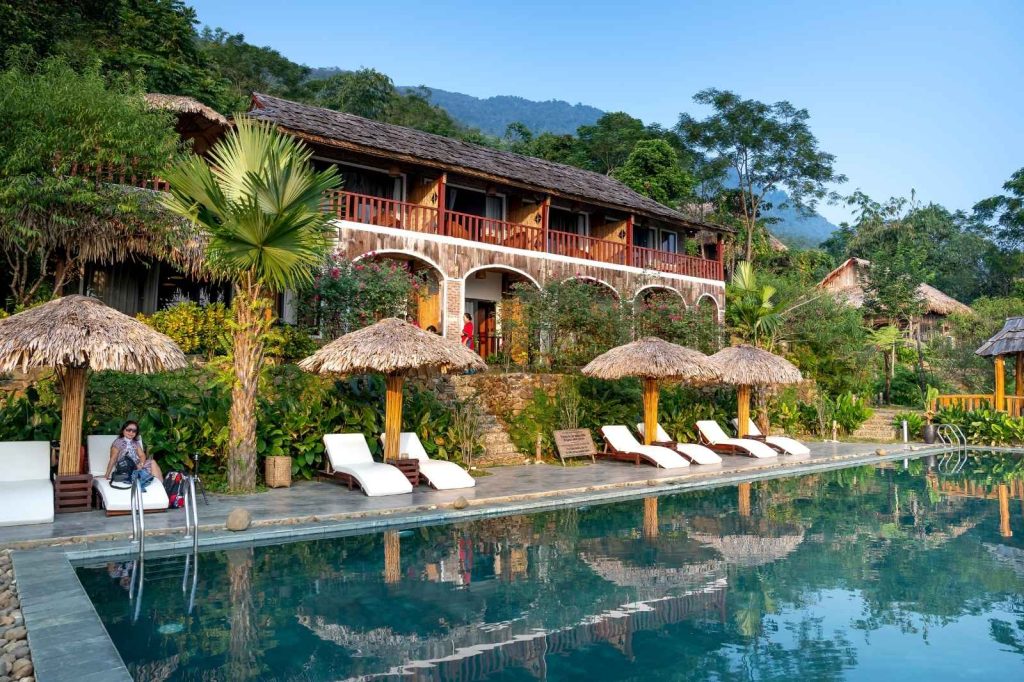
Hotel SEO as a competitive advantage
For a boutique hotel, SEO is not a luxury. It is a strategy that allows you to:
- Compete with bigger chains that have larger budgets
- Stand out in saturated tourist markets
- Attract international guests willing to pay higher rates
- Build brand and long-term positioning
- Reduce OTA dependence without losing occupancy
A boutique hotel that invests in SEO is investing in control, profitability and stability.
Ongoing support, measurement and optimization with Digisap
Digisap’s approach is based on:
- Initial SEO and CRO audits
- Definition of KPIs directly tied to revenue
- Technical optimization of the website and booking engine
- Strategic geolocalized content
- Implementation of SEO + SEM + metasearch campaigns
- Continuous A/B testing and experimentation
- Clear monthly reports to support decision-making
The goal is always the same: increase direct bookings and improve the hotel’s margin.
Request a personalized consultation for your boutique hotel
Discover how Digisap can help you double your direct bookings in 12 months with an SEO strategy tailored to your destination and your ideal guest:
https://digisap.com/
Frequently Asked Questions
How much can a boutique hotel increase direct bookings with SEO?
Results vary, but well-executed hotels often achieve increases of 40% to 100% over a 12-month period.
How long does it take to see the first results?
Between 3 and 4 months you’ll see improvements in rankings and traffic. Strong impacts on bookings usually occur between months 6 and 12.
What makes hotel SEO different from traditional SEO?
Hotel SEO requires a focus on booking intent, geolocalized optimization, experiential content, and coordination with booking engines and paid campaigns.
Yes. Direct bookings grow faster when multiple channels are integrated to compete with OTAs on both branded and transactional searches.
Does Digisap support the entire process?
Yes. Digisap acts as a Growth Partner, integrating into the hotel’s team and providing a continuous, measurable, revenue-oriented work plan.
Doubling direct bookings in 12 months through SEO is an achievable goal for boutique hotels that commit to a clear, geolocalized, conversion-focused strategy. SEO is not immediate, but it is the most profitable tool to build independence from OTAs and secure a steady flow of high-value guests. With the right guidance, disciplined measurement and the support of a specialized partner like Digisap, a hotel can sustainably improve its positioning, occupancy and margins.
Boost your hotel’s growth with an SEO strategy designed for your reality.
Schedule a personalized consultation with Digisap → https://digisap.com/