A boutique hotel website can be visually appealing, but if the booking page is not optimized to convert, direct sales simply do not grow. General managers and marketing leaders in destinations such as Bogotá, Medellín, Cartagena, Mexico City, Miami and Orlando often face the same challenge: Heavy dependence on OTAs and low conversion in the booking engine.
This practical guide presents a visual UX checklist designed to help boutique hotels turn more visitors into guests, with clear criteria around mobile experience, trust, pricing, speed and structure.
Key Benefits of an Optimized Booking Page
Immediate increase in conversion rate
Improving design, clarity and trust elements can double a site’s conversion from 1% to 2% or more, resulting in significant growth in direct bookings without increasing advertising investment.
Lower abandonment during the booking process
An optimized page reduces friction at critical steps such as viewing rates, selecting dates and confirming the reservation. This lowers abandonment rates, which in hotels can exceed 70% when UX is poor.
Greater trust and credibility
Visual quality, testimonials, reviews and security elements help guests feel confident booking direct. This increases perceived value and strengthens the hotel’s independence strategy from OTAs.
Better performance on mobile devices
More than 65% of direct bookings in Latin America are made from mobile devices. A responsive, fast and easy-to-use design is essential to compete with OTAs.
Increased total revenue per guest
An optimized booking page enables effective cross-selling and upselling, showing additional benefits and higher-rate options clearly and intuitively.
Visual Checklist: What the Ideal Boutique Hotel Booking Page Should Look Like
Clean, modern and conversion-oriented design
The page should be free of distractions, aligned with the hotel’s brand colors and structured to guide users toward booking. Overloaded or unprofessional designs create distrust.
Optimized loading speed
Ideal loading time is under 3 seconds. This includes compressed images, optimized scripts and a fast booking engine. Every additional second can reduce conversions by up to 20%.
Mobile-first design
The layout must adapt to small screens without losing readability. Large buttons, easy date selection and smooth navigation are essential.
Key actions:
- Touch-friendly calendar
- Rates visible without zooming
- “Book Now” button always accessible
- Avoid intrusive pop-ups
Visible trust signals
Guests book direct when they feel safe. Recommended elements:
- SSL certificates
- Messages like “Secure booking”
- Payment method logos
- Clear cancellation policies
- Best direct rate guarantee
These elements should be present throughout the entire booking flow.
Social proof in key areas
The booking page should not be an empty transactional space. To increase trust:
- Recent reviews with ratings
- Short testimonials
- Awards or recognitions
- Real guest-generated photos
- Visible links to Google Reviews or TripAdvisor
According to Digisap project analyses, social proof increases conversion by 12% to 18%.
Clear and transparent pricing
Confusion around pricing is one of the main reasons for abandonment.
You should clearly display:
- Price per night
- Total price with taxes
- Cancellation policies
- Differences between room categories
- Benefits included with direct booking
Clarity builds trust and reduces objections.
Persuasion using urgency and real availability
Boutique hotels can leverage urgency ethically without resorting to aggressive tactics.
Recommended:
- “Only two rooms left for your dates”
- “High demand this week in the tourist district”
- “Exclusive website rate”
OTAs dominate this technique—hotels should use it responsibly and transparently.
Optimized photos and videos
Users must visualize rooms clearly and without friction.
Recommendations:
- Professional room photography
- Optional short videos
- Fast-loading image galleries
- Real images that match the guest experience
Visible, persistent call-to-action
The main CTA must remain visible throughout the booking process:
- Book Now
- Check Availability
- Confirm Booking
Contrast, clear typography and strategic placement are critical for higher completion rates.
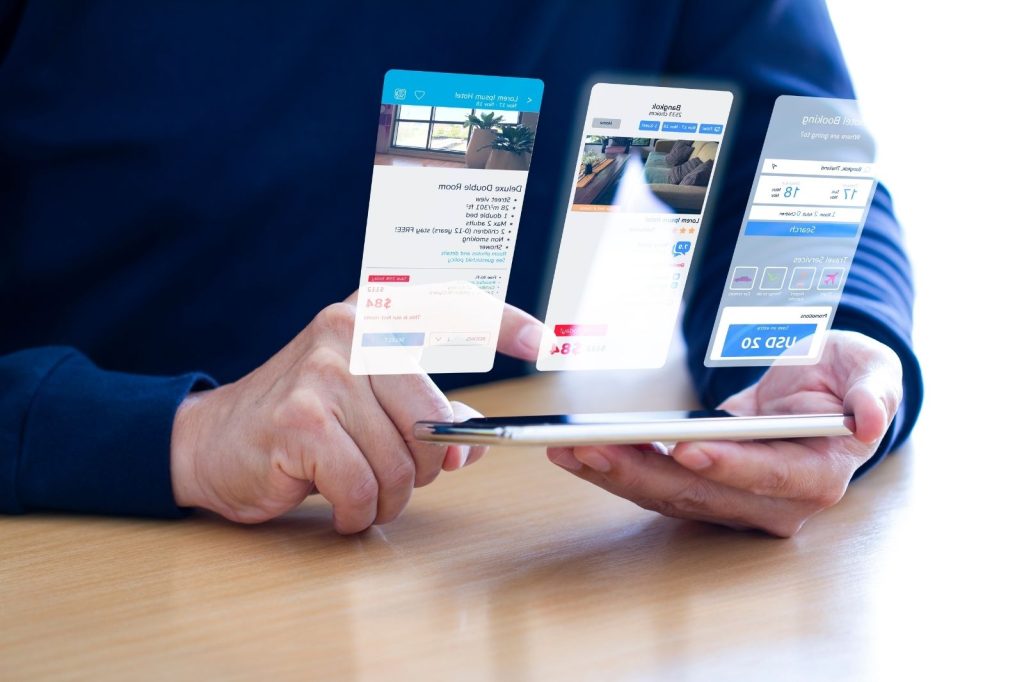
Intuitive and reliable booking engine
The booking engine must meet the following criteria:
- Modern interface
- Simple fields
- Minimal steps
- Reliable payment methods
- Integration with analytics tools
- Instant confirmation with automated email
Digisap integrates conversion analysis and A/B testing to optimize this point, as it is where most revenue is gained or lost.
Use Cases in Boutique Hotels Across Latin America and the U.S.
Boutique hotel in Cartagena
Problem: High abandonment in the booking engine.
Actions: UX redesign, mobile improvements, trust signals and clear pricing.
Results:
- Website conversion: 1.1% → 2.4%
- Direct bookings increase: 51%
- Abandonment reduction: 37%
Hotel in Bogotá, Chapinero area
Problem: Low clarity in policies and pricing.
Actions: Full restructuring of booking flow and price display.
Results:
- “Book Now” clicks increased by 58%
- WhatsApp inquiries decreased by 22%
- Improved review scores: +0.3 points on Google
Hotel in Mexico City, Polanco
Problem: Poor mobile experience.
Actions: Mobile booking engine optimization, persistent CTA, honest urgency.
Results:
- Mobile conversions increased by 73%
- Direct revenue increased by 28% in 90 days
Hotel in Miami Beach
Problem: Slow and unintuitive navigation.
Actions: Speed and visual-structure optimization.
Results:
- Page load time improved from 7.9s to 2.8s
- Improved SEO for branded searches
- +33% direct bookings
The Booking Page as a Competitive Advantage for Boutique Hotels
A well-designed booking page is a sales tool, not just a technical component. Boutique hotels can compete with chains and OTAs if:
- Their page is clearer and faster
- Mobile experience is superior
- Payment process is comfortable
- Trust is evident
- Direct rate provides real value
The booking page is not a detail—it is the core of the hotel’s digital independence strategy.
Ongoing Support, Measurement and Optimization With Digisap
Digisap’s Growth Partner approach includes:
- Technical audits of website and booking engine
- UX and CRO analysis focused on conversion
- A/B testing to identify improvements
- Content strategy for clarity and trust
- Continuous mobile optimization
- Integration with SEO, SEM, GEO and social ads
- Dashboards with key metric tracking
The objective remains constant: More direct bookings, higher margins and less dependence on intermediaries.
Request a Personalized Consultation to Optimize Your Booking Page
Discover how Digisap can help increase your conversion rate with a booking page optimized for your guest profile and destination:
https://digisap.com/
Frequently Asked Questions
What is a good conversion rate for a boutique hotel?
Between 1.5% and 3%, depending on destination and season. With strong optimization, it can go higher.
What causes the most abandonment on a booking page?
Slow loading, unclear pricing, confusing policies, poor design and weak mobile experience.
Can a booking engine limit conversion?
Yes. Some engines are slow or unintuitive. Digisap can audit your current engine and recommend improvements or alternatives.
Is A/B testing necessary?
Highly recommended. Tests reveal which layouts, texts and elements best convert with your audience.
How long does it take to improve conversion?
On average, 30 to 90 days depending on the initial state and implementation speed.
The booking page is the core of direct sales in a boutique hotel. When it is designed with clarity, speed, trust and an optimal mobile experience, it becomes the hotel’s strongest revenue driver. Every UX improvement has a direct impact on conversion rate and margin. With Digisap’s specialized support, hotels can transform their booking page into a strategic asset that increases occupancy, revenue and business sustainability.
Improve your hotel’s conversion with a booking page optimized for your reality.
Schedule a personalized consultation with Digisap → https://digisap.com/