The hotel sector is at the center of the most accelerated digital transformation in its history. In 2025 and 2026, the hotels that grow aren’t necessarily the ones with the most rooms or the most luxurious — they’re the ones that understand, before the competition, how the way their guests search, discover, decide, and book is changing.
Artificial intelligence is no longer an emerging trend: it’s the infrastructure on which the digital visibility of any hotel is built, regardless of its size or category. And while most independent hotels in Bogotá, Medellín, Cartagena, Mexico City, Miami, and Orlando are still optimizing for the Google of 2020, their potential guests are already in a different search ecosystem. At Digisap we continuously monitor these trends because knowing what’s coming first is the difference between leading or following in the digital hotel market. To understand how to leverage visibility in the new AI search engines — the most disruptive trend of this period — the article on innovative marketing strategies for hotels: SEO, artificial intelligence, influencers, and sustainability offers the most complete context available.
1. Generative search changes the rules of hotel discovery
The highest-impact trend for hotels in 2025–2026 isn’t a new social network or a new advertising format: it’s the change in how travelers search for hotels.
Before: the traveler opens Google, types “hotel in Medellín,” sees a list of results, and clicks on the first three.
Now: the traveler asks ChatGPT “what’s the best boutique hotel in El Poblado for a honeymoon in May?” and receives a direct response with two or three specific recommendations — without seeing the list of results, without clicking any additional link.
For the hotel that appears in that response: direct high-intent visibility, zero competition on the user’s screen. For the one that doesn’t appear: total invisibility on that channel.
What to do in 2025–2026:
- Create specific content that answers the high-intent questions travelers ask in AI search engines.
- Implement schema markup so AI models understand the hotel type, location, amenities, and segment it serves.
- Publish content with concrete data, real cases, and editorial perspective — the type of content that AI cites as a source.
- Build consistent presence in the directories and platforms that AI models use as sources (TripAdvisor, Google Maps, specialized travel media).
2. Short video as a direct booking channel
TikTok and Instagram Reels have permanently transformed the hotel discovery process. In 2025, short video isn’t just a branding tool — it’s a demand generation channel with direct impact on bookings.
The data is clear: 60% of travelers under 40 have discovered a hotel through a TikTok or Instagram Reels video before searching for it directly. A hotel without active video presence is ceding visibility in the highest-growth organic channel available.
What changes in 2025–2026:
- Behind-the-scenes short video (breakfast preparation, room decoration, terrace views) has more impact on booking intent than corporate-produced video.
- TikTok as a search engine: a growing fraction of young travelers searches for hotels directly on TikTok — “#hotelsMedellin,” “#boutiquehotelCartagena.” Optimizing the hotel’s TikTok profile and using correct hashtags is part of 2025 SEO.
- The integration between video and direct booking: the optimized bio link, the booking sticker in Stories, and the action button on TikTok are the bridges between content and conversion.
3. Data-based personalization: from segment to individual
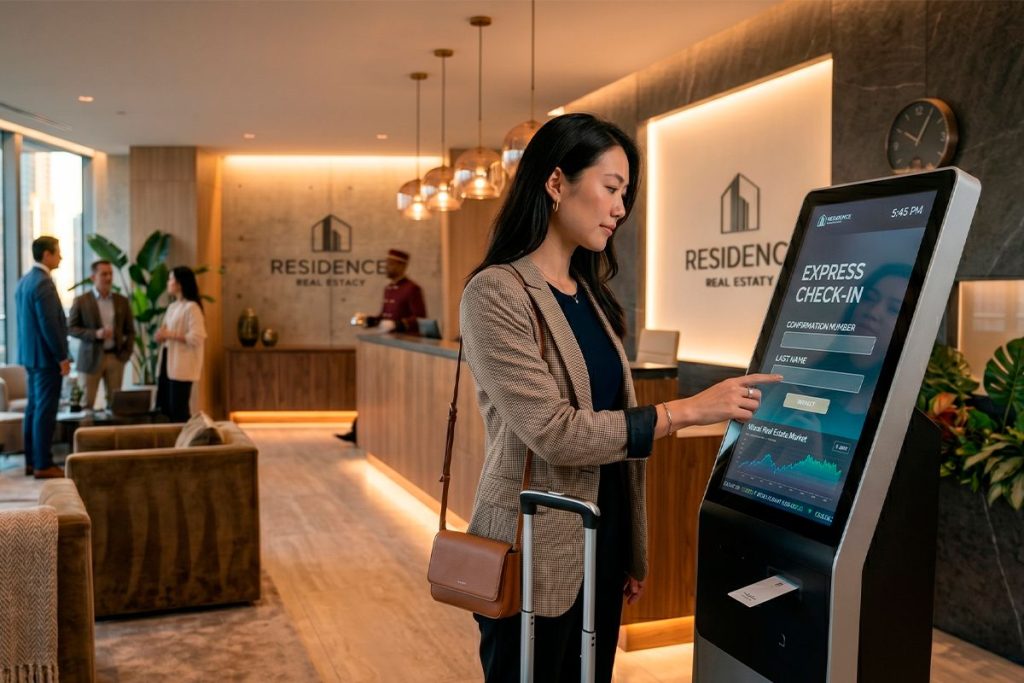
Hotel personalization has moved from being a luxury differentiator to a widespread expectation. In 2025–2026, guests don’t just expect the hotel to know their name: they expect it to anticipate their preferences, personalize their communication, and offer what they need before they ask for it.
Tools that make personalization at scale possible:
- Hotel CRM connected to the booking engine: captures each guest’s preferences, stay history, and booking behavior.
- Email and WhatsApp automation: personalized communications sent at the right moment in the guest cycle — pre-arrival, mid-stay, post-checkout, stay anniversary.
- Generative AI for message personalization: tools that generate personalized welcome and follow-up messages at scale without additional manual work.
What it means for strategy: Hotels that invest in their data systems — correctly capturing each guest’s information and using it in subsequent communications — have return booking rates between 2x and 4x higher than those that treat all guests the same way.
4. Google Hotel Ads and metasearch: the most efficient advertising for direct bookings
In 2025, Google Hotel Ads has consolidated its position as the highest-ROAS channel for independent hotels that want to compete with OTAs directly at the moment of booking. And its integration with Google AI Overviews makes it even more strategic: the hotel availability panel that Google shows in its AI responses includes Hotel Ads results.
Google Hotel Ads trends for 2025–2026:
- Greater integration with AI search engines: hotels with active Google Hotel Ads have an advantage in Google’s new integrated search formats.
- AI-improved automatic bidding campaigns: Google’s machine learning-based bidding strategies continuously improve campaign ROAS.
- Voice search visibility: when someone asks Google Assistant “hotel available tonight in El Poblado,” Google Hotel Ads determines what appears in the response.
5. Sustainability as a digital marketing differentiator
In 2025, sustainability has stopped being a niche of interest and has become an active selection criterion for a growing portion of travelers — especially in the high-value segment. 73% of global travelers say they would pay more to stay in a hotel with verifiable sustainability certifications.
What it means in digital marketing terms:
- Sustainability certifications (like Green Key, Rainforest Alliance, or sustainable tourism certifications in Colombia and Mexico) must be visible on the website, in the GBP, and on the TripAdvisor profile.
- Sustainability content ranks for specific searches: “sustainable hotels in Cartagena,” “eco-hotels in Medellín,” “carbon-neutral hotels in Colombia.”
- The hotel’s sustainability story — what it does, why it does it, how it measures it — is high-value content for GEO and AIO: AI search engines frequently cite specific sustainability content when responding to questions about responsible tourism.
6. The return of local search with immediate intent
“Hotel available tonight near me” — local searches with immediate intent have grown 70% in the last two years, driven by the last-minute traveler and the impulse trip. For hotels with variable occupancy, this segment represents an opportunity to fill rooms that would otherwise remain empty.
How to capture immediate-intent searches:
- Google Business Profile updated with real-time availability (PMS integration).
- Last-minute rates in Google Hotel Ads activated for days with projected low occupancy.
- “Available today” content in Instagram Stories and TikTok to generate immediate demand.
- Active retargeting campaign for users who visited the website in the last 48 hours but didn’t book.
7. AI in hotel marketing operations
In 2025–2026, artificial intelligence doesn’t just change how travelers search for hotels — it also changes how hotels do marketing. Generative AI tools have significantly reduced the cost and time of content production, while AI-based analytics tools enable faster and more precise marketing decisions.
AI applications already transforming hotel marketing:
- Content generation: blog articles, room descriptions, review responses — AI generates drafts that the team refines, reducing production time to a fraction of what it was before.
- Dynamic rate optimization: AI-based revenue management systems that adjust rates in real time based on demand, competition, and occupancy forecast.
- WhatsApp chatbots with AI: automatic response to frequent inquiries about availability, prices, and services — 24/7, in the guest’s language, without manual team work.
- Behavior-based email personalization: systems that adapt email content based on each guest’s history — without manual segmentation.
8. Hotel influencer marketing evolves toward nano and micro influencers
Hotel influencer marketing has matured significantly. In 2024–2025, the “stay exchange for posts” model with macro influencers with millions of followers has given way to more sophisticated and measurable strategies.
The dominant trend in 2025–2026:
- Nano influencers (1K–10K followers): 5%–10% engagement rates, very specific audiences (gastronomic travelers, honeymooning couples, families with young children), and a significantly lower collaboration cost. For boutique hotels in specific markets, 10 collaborations with relevant nano influencers can generate more impact than one with a generic macro influencer.
- Influencers with Latin American audience: for hotels in destinations that want to capture the high-value Latin American segment (like hotels in Miami or luxury destinations in Colombia), collaborating with influencers who have a specific audience in Colombia, Mexico, or Venezuela can be more effective than direct digital advertising.
- Conversion-based measurement, not reach: engagement rate and followers are vanity metrics. The success of an influencer collaboration is measured in generated website traffic, discount codes used, and directly attributable direct bookings.
Case studies: hotels that anticipated trends and grew
Hotel in Medellín: GEO that captured travelers before the competition
A boutique hotel in El Poblado began implementing AI search engine optimization strategies in the first quarter of 2025 — when most of its competition hadn’t yet heard of GEO. In 6 months, the hotel began appearing in Perplexity and ChatGPT responses for searches like “best boutique hotel in Medellín for couples” and “design hotel in El Poblado.” Total organic traffic increased 34% and direct bookings grew 28% without increasing the paid advertising budget.
Apart-hotel in Bogotá: TikTok video that overwhelmed capacity
A digital nomad apart-hotel in Chapinero published a series of TikToks showing the workspace, internet connection, view, and neighborhood — with the hashtag #digitalnomadBogota. In 4 months it accumulated 180,000 TikTok followers and booking inquiries tripled, reaching a point where the hotel had to create a waiting list for the following month.
Boutique chain in Cartagena: sustainability as a high-value differentiator
A mini chain of 3 boutique hotels in Cartagena’s historic center obtained MinCIT Sustainable Tourism certification in 2024 and integrated sustainability as a central pillar of its digital marketing. In 12 months, 31% of its new guests mentioned the sustainability certification as one of the decisive factors in choosing those hotels over the competition — with an average ADR 22% higher than similar hotels without certification.
What doesn’t change: the fundamentals of hotel digital marketing
While trends evolve, there are principles that remain constant and that are the foundation on which everything else works:
- Experience quality is the foundation of every marketing strategy. Digital marketing amplifies — doesn’t replace — the hotel’s operational excellence.
- Reviews remain the most powerful conversion factor. In 2025, 93% of travelers read reviews before booking. Nothing in digital marketing is more persuasive than a high volume of genuine, recent reviews.
- The direct booking remains the objective. Whatever the discovery channel — TikTok, ChatGPT, Google Maps — the ultimate goal is for the guest to book directly, without an intermediary, with the highest possible conversion rate.
- Data is the most valuable asset. The hotel that has good data about its guests — who they are, where they come from, when they book, what motivates them to return — will always make better marketing decisions than one operating without data.
To see how Digisap integrates all these trends into a continuous growth strategy for hotels of different sizes, the article on advantages of implementing a growth marketing strategy: sustainable growth with Digisap details the work model and the results it generates.
How Digisap integrates these trends into each hotel’s strategy
At Digisap we continuously monitor the digital ecosystem of the hotel sector to anticipate which channels and strategies will have the greatest impact in the next 12–18 months. That market intelligence informs each client’s strategy — not generically, but adapted to the hotel’s size, target market, positioning, and specific occupancy and ROAS objectives.
Our work includes:
- Trend audit: analysis of the hotel’s current visibility in each relevant channel — traditional search, AI, social media, metasearch.
- Implementation roadmap: prioritization of the highest-impact trends for the specific type and size of hotel.
- Continuous implementation and management: strategy execution, with monthly adjustment based on performance data.
- Quarterly trend report: updating the client on what’s changing and how the strategy adjusts accordingly.
Is your hotel positioned for the 2025–2026 search ecosystem?
Request your free Digisap diagnosis and within 48 hours we’ll evaluate your hotel’s current visibility in the most relevant channels of 2025–2026, identify the highest-impact opportunities, and show you which trends to implement first to maximize return.
FAQs about hotel digital marketing trends
What is the most urgent digital marketing trend for a hotel in 2025?
Optimization for AI search engines (GEO/AIO) is the trend with the greatest immediate opportunity window, because competition in that space is still very low. The hotel that positions itself in ChatGPT, Perplexity, and Google AI Overviews now will have a competitive advantage that will become increasingly difficult to replicate as the channel matures.
Does short video work for all types of hotels?
Yes, though content type varies. For a luxury hotel, the video shows the level of detail and sophistication of the experience. For a business hotel, it shows functionality and location. For a family hotel, it shows the fun and children’s facilities. The format is universal — the message adapts to the segment.
How do AI search engines affect booking portals like Booking or Expedia?
In the medium term, mass adoption of AI search engines could reduce traffic to booking portals, as users receive direct recommendations without needing to navigate multiple options. This favors hotels with a strong direct presence — SEO, GBP, optimized website — and penalizes those that depend exclusively on portals as an acquisition channel.
How much does it cost to implement an influencer marketing strategy for a boutique hotel?
With nano influencers (1K–10K followers), the cost is generally low — many collaborate in exchange for a complimentary stay with no additional fee. With micro influencers (10K–100K), it may involve an additional fee of USD 200–800 per post depending on the niche and audience. ROI is measured in attributable traffic and bookings, not gross reach.
Should my hotel have a presence on all social media platforms?
Not necessarily. It’s better to have an active, consistent presence on 2 platforms than a basic, inconsistent presence on 5. For most hotels, Instagram and TikTok are the priorities. YouTube can be valuable for longer-format destination content. Facebook remains relevant for the older segment and for retargeting campaigns.
Hotel digital marketing in 2025–2026 doesn’t wait for those who prepare late
The trends described in this article aren’t predictions: they’re ongoing realities. The hotels acting now — implementing GEO, activating short video, personalizing with data, optimizing for immediate-intent searches — are capturing visibility and bookings in channels where competition is still low.
Those who wait for these trends to go “mainstream” before starting will find a much more competitive and costly landscape.
At Digisap we accompany hotels in Bogotá, Medellín, Cartagena, Mexico City, Miami, and Orlando in navigating these trends with concrete strategies, agile implementation, and measurable results.
Schedule a personalized consultation and discover which digital marketing trends are most urgent for your hotel right now.