A 20-room boutique hotel cannot compete with Marriott or Hyatt on mass advertising budget. But it can beat them in specific niches, in authenticity, in local positioning, and in the ability to emotionally connect with its ideal guest in a way a chain can never replicate. Digital marketing for boutique hotels exists precisely to amplify those advantages — and convert them into measurable direct bookings.
The reality of the independent hotel market in Bogotá, Medellín, Cartagena, Mexico City, Miami, and Orlando is that boutique hotels compete in a two-speed game: chains have massive budgets and global brand recognition; boutiques have something chains can’t buy with any budget — a real story, an authentic identity, and the ability to offer a genuinely personal experience. Digital marketing is the tool that puts those advantages in front of the right guest, at the right moment, at a cost the boutique hotel can sustain. To understand the specific growth marketing strategies applied to this segment, the article on growth marketing strategies for boutique hotels details the real results this approach generates in independent properties.
The competitive advantages of a boutique hotel in the digital environment
Before discussing strategies, it’s important to understand why boutique hotels have real advantages that digital marketing can amplify:
Authenticity chains can’t replicate A hotel chain has global standards that guarantee consistency but eliminate personality. A boutique hotel in Cartagena’s historic center, in a 200-year-old colonial building with local art in every room and a breakfast prepared with regional recipes, offers an experience that can’t be standardized. That differentiation is digital gold — it’s exactly what high-value travelers are searching for on Google, Instagram, and ChatGPT.
Agility to respond to the market A boutique hotel can change its pricing strategy in hours, launch a seasonal campaign in days, and respond to a negative review with the owner’s voice in minutes. A chain needs weeks of approval processes to do the same.
Niche positioning Chains target the mass market. The boutique hotel can position itself in extremely high-value niches — luxury travelers, digital nomads, ecotourism enthusiasts, honeymooning couples, gastronomic travelers — where the chain’s budget makes no difference because authenticity is worth more than brand recognition.
The digital marketing strategy for boutique hotels: the 6 pillars
1. Niche positioning: being the best for someone, not the average for everyone
The most common boutique hotel digital mistake is trying to compete with chains on the same terms — “hotel in [city],” “rooms from X price.” That’s the game where the chain’s budget always wins.
The correct strategy is niche positioning: establishing yourself as the best option for a specific guest profile. Concrete examples:
- “The best hotel for couples in Cartagena’s historic center”
- “The most pet-friendly boutique hotel in El Poblado Medellín”
- “The only hotel with a private rooftop terrace in La Candelaria Bogotá”
- “The most exclusive design hotel in Wynwood Miami”
This niche positioning not only differentiates — it also facilitates SEO, content, and paid campaigns, because the target audience is much more defined and the message is much more specific.
2. Niche and destination SEO: appearing when the traveler searches for exactly what you offer
The SEO strategy for a boutique hotel isn’t competing for “hotel in Medellín” — the chain wins that battle. It’s ranking for more specific searches where competition is lower and intent is higher:
- “Boutique hotel with pool in El Poblado Medellín”
- “Romantic hotel in Cartagena walled city with breakfast included”
- “Design hotel in downtown Mexico City”
- “Boutique hotel near South Beach Miami with rooftop”
These searches have lower volume but extremely high conversion intent — the user searching “romantic hotel in Cartagena with breakfast included” is much closer to booking than the one searching “hotel Cartagena.”
The boutique hotel blog is the most powerful tool for ranking in destination searches — articles about what to do in the city, recommended restaurants, local events, neighborhood history. This content attracts travelers during their trip planning phase and positions the hotel as the expert local guide even before the booking.
3. Digital brand identity: telling the story the chain can’t tell
A boutique hotel’s digital identity is its greatest differentiating asset. The building’s history, the chef behind the breakfast, the art curator who chose each piece, the founder who left a corporate career to create an authentic experience — these stories generate emotional connection that no campaign budget can buy.
Digital brand identity for a boutique hotel is built with:
- Photography that tells a story: not just room photos, but images of the hotel’s soul — the architectural details, the garden at 6am, the handmade breakfast, the team that knows each other by name.
- Origin and purpose video: a short 60–90-second video that introduces the founder, the building’s history, or the hotel’s philosophy. It’s the content with the highest conversion rate for boutique hotels on social media.
- Consistent editorial voice: the tone the hotel uses to communicate on Instagram, in emails, on its website, and in review responses must be recognizably its own — not the generic corporate language of a chain.
4. Social media: the window into the hotel’s soul
For a boutique hotel, Instagram is the most effective sales room available. Every post is an invitation to live an experience the user can’t have at a chain. The content categories that convert most for boutique hotels:
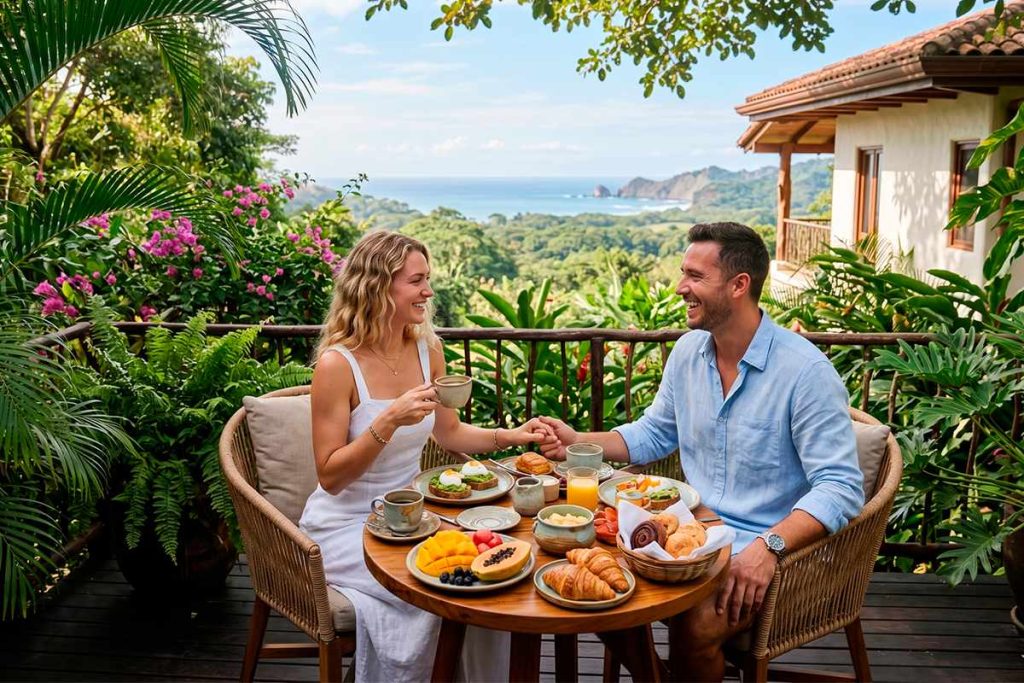
- Details that generate desire: the coffee cup served on the terrace with a view, the hotel-curated bedside book, the artisan room amenities.
- Team behind the scenes: the chef preparing breakfast, the housekeeper decorating the room with fresh flowers, the receptionist recommending the neighborhood’s favorite restaurant.
- UGC from happy guests: reposting photos and videos from guests sharing their experience — with mention and thanks — is the most authentic and persuasive content available.
- The destination through the hotel’s eyes: Stories content about local events, the team’s favorite restaurants, nearby artisan markets — content that positions the hotel as the destination experience curator.
5. Google Hotel Ads and metasearch: the most efficient paid advertising for the direct channel
For a boutique hotel, Google Hotel Ads is the highest-ROAS paid advertising investment available, because it competes directly with OTAs at the moment of maximum intent — when the user is already searching for availability and price.
The strategy is simple but powerful: connect the hotel’s booking engine to Google Hotel Ads, offer rate parity or a small direct channel pricing advantage (breakfast included, late check-out, conditional upgrade), and appear in the Google panel alongside Booking and Expedia with the advantage of “book directly here.”
The cost of Google Hotel Ads is a percentage of the generated booking — between 5% and 12% depending on the market — significantly lower than an OTA commission (15%–25%).
6. Email marketing and loyalty: the most underutilized boutique hotel asset
Boutique hotels have a unique loyalty advantage: their guests didn’t choose an anonymous chain hotel — they chose a specific experience, with its own personality, that they want to repeat and actively recommend. A well-implemented email marketing system that keeps that relationship alive — with valuable content, exclusive offers for past guests, and personalized communication — can generate a constant flow of direct return bookings at no acquisition cost.
For a deeper look at how to manage online reputation specifically for boutique hotels and convert it into a direct booking engine, the article on online reputation management for hotels: how to boost your reviews on Google, TripAdvisor, and Booking details the complete protocol for maximizing review impact in independent properties.
Case studies: boutique hotels that grew with specialized digital marketing
Boutique hotel in Cartagena: from 72% OTAs to 41% in 8 months
An 18-room hotel in Cartagena’s San Diego neighborhood had 72% of its bookings coming from OTAs. With a niche strategy — positioning as “the most intimate hotel for couples in San Diego Cartagena” — combined with Google Hotel Ads, niche SEO, and a post-stay email sequence, it reduced OTA dependency to 41% in 8 months. The average ROAS on paid campaigns was 6.3x and ADR (average daily rate) increased 18% because the niche positioning attracted a higher-purchasing-power segment.
Boutique hotel in El Poblado Medellín: Instagram that generated 28% of direct bookings
A 25-room hotel in El Poblado implemented an Instagram strategy centered on the building’s story — a 1940s manor house restored with contemporary local art. The mixed content of architectural photography, room art, and team behind-the-scenes grew the account from 800 to 11,000 followers in 7 months, with a 9.2% engagement rate. Direct bookings attributable to Instagram represented 28% of the hotel’s total direct bookings during that period.
Boutique hotel in Miami: Latin American traveler niche that reduced seasonality
A 30-room boutique hotel in Coral Gables Miami had a marked seasonality: full during peak American tourism season and with low occupancy in September and October. By implementing a digital strategy focused on the niche of high-purchasing-power Latin American travelers — with Spanish SEO, bilingual content, and Meta Ads campaigns targeting Colombia, Mexico, and Venezuela — historically slow months moved to 68% occupancy, compared to 34% the previous year.
Digisap support for boutique hotels
Digisap works specifically with boutique and independent hotels that want to compete intelligently — not with a chain’s budget, but with the right strategy for their size, their niche, and their market.
Our growth partner model for boutique hotels includes:
- Niche positioning definition: identification of the ideal guest segment and construction of the differentiating message.
- Niche and destination SEO: pages and content optimized for the high-intent specific searches of the target segment.
- Instagram and TikTok management: content strategy that tells the hotel’s story and converts followers into guests.
- Google Hotel Ads: setup, management, and optimization of metasearch campaigns.
- Loyalty email marketing: automated sequences that generate return bookings from past guests.
- Measurement and reporting: business KPI tracking — direct bookings, ROAS, ADR — with real-time updated dashboards.
Your boutique hotel has what chains can’t buy — digital marketing amplifies it
The authenticity, history, personalization, and unique experience of a boutique hotel are exactly what today’s traveler is looking for. Digital marketing is the tool that puts those advantages in front of that traveler at the right moment.
Request your free Digisap diagnosis and within 48 hours we’ll analyze your current positioning, your niche opportunities, and what strategy can transform your boutique hotel’s direct bookings in the next 90 days.
FAQs about digital marketing for boutique hotels
What minimum budget does a boutique hotel need for digital marketing?
A boutique hotel can start with USD 500–800/month in paid advertising (Google Hotel Ads + basic Meta Ads) plus investment in SEO and content. Return depends on the hotel’s average rate — for a boutique with an ADR of USD 150, recovering that investment requires only 5–6 additional monthly direct bookings.
Is it better for a boutique hotel to be on many OTAs or few?
Presence on the main OTAs (Booking, Expedia, Airbnb depending on segment) is recommended for visibility, especially at the start. The strategy is to use them as a new guest acquisition channel, then convert those relationships into direct bookings on future stays through email marketing and loyalty programs.
How does a boutique hotel compete with chains in Google Ads?
Not on the same keywords. Chains dominate generic searches with massive budgets. The boutique dominates niche searches — more specific, less competitive — where purchase intent is equal or greater. Google Hotel Ads is especially effective for boutiques because direct competition in metasearch is more balanced.
What is the main marketing mistake of boutique hotels?
Trying to be everything to everyone. A boutique hotel that tries to compete in the mass market always loses to chains. The one that positions itself as the best option for a specific niche — and builds all its digital communication around that niche — wins in its segment regardless of the chain’s budget.
How long does it take to see the impact of a digital marketing strategy for a boutique hotel?
Paid campaigns can generate additional bookings in the first 2–4 weeks. Niche SEO requires 3–6 months to rank significantly. Social media growth and email loyalty have a cumulative impact that consolidates between month 3 and month 6. The overall strategy ROAS typically exceeds 4x from month 4–5.
The traveler searching for your hotel already exists — digital marketing helps them find you
At Digisap we build digital marketing strategies specifically designed for the reality and advantages of boutique hotels. Because we believe that authenticity — when correctly communicated across the right digital channels — is the most powerful differentiator available in today’s hotel market.
Schedule a personalized consultation and discover how we can position your boutique hotel in front of the ideal guest who is searching for exactly what you offer.