In many restaurants, events represent a peak in operational effort—and a missed marketing opportunity. Time, staff, production, and experience are invested into a single day, and once the event ends, everything is reduced to a few photos in a drive or, at best, a single social media post.
The issue isn’t a lack of content. It’s a lack of system.
Every event—corporate, social, or gastronomic—has the potential to generate relevant content for weeks, strengthen the brand, attract new customers, and support future purchasing decisions.
In cities such as Bogotá, Medellín, Cartagena, Miami, New York, and Washington, where events are a key driver of visibility and sales, restaurants that reuse content strategically achieve greater impact with less effort, without relying on constant production.
Why events are a content goldmine (and why most restaurants miss it)
A single event brings together:
- Real people experiencing the brand
- Genuine emotions
- Spaces in use
- Service in action
- Spontaneous testimonials
Everything marketing tries to prove is already happening live.
The common mistake is thinking content must be created separately from the event, when the event itself is the content.
The mindset shift: from “event post” to content ecosystem
Posting one photo after an event underutilizes its value.
The right approach is to view each event as a content ecosystem, adapted to different channels, formats, and stages of the customer journey.
One well-documented event can feed:
- Blog
- Instagram
- LinkedIn
- Stories
- Newsletter
- WhatsApp
- Google Business Profile
The key is planning reuse—not improvising after the fact.
The 10 content pieces every event can generate
1. Main social media post
A post that presents the event as an experience:
- Atmosphere
- Service
- Event type
- Audience
It’s not about saying “we hosted an event,” but showing how it feels.
2. Detail-focused carousel
A carousel highlighting:
- Setup
- Food
- Spaces
- Key moments
This format reinforces perceived value and professionalism.
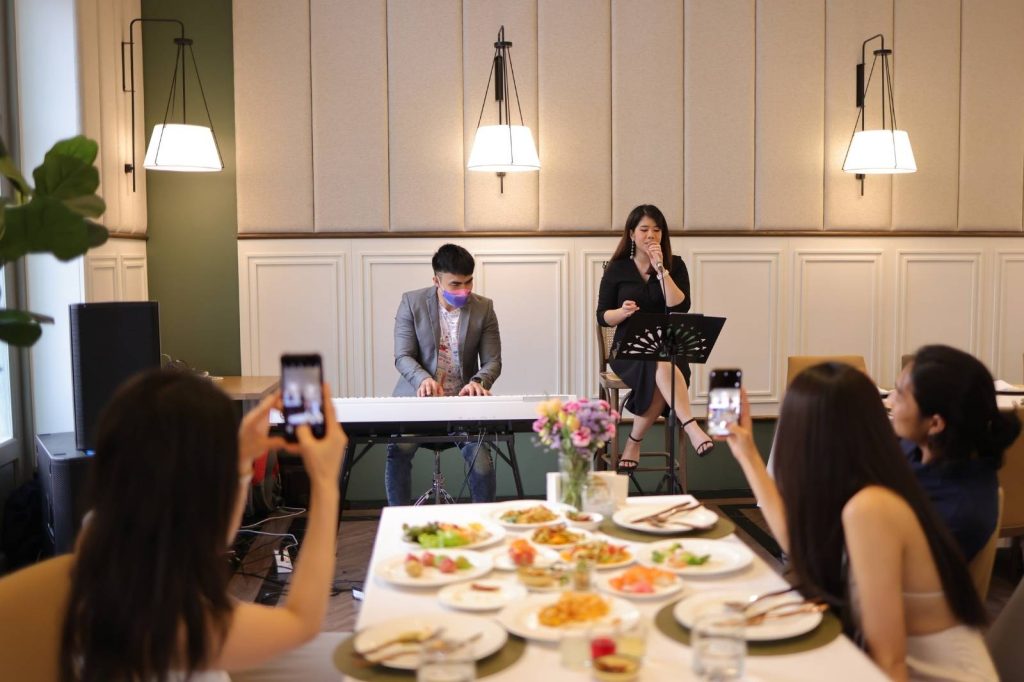
3. Real-time stories (and reused later)
Stories don’t end when the event ends.
They can be reused as:
- Highlights
- Reels content
- Assets for future campaigns
Capturing intentionally during the event saves time later.
4. Short client or guest testimonial
A real comment is more powerful than any ad copy.
It can be:
- A short video
- A written quote
- A message screenshot
This content builds trust and accelerates future decisions.
5. Short-form video or reel
A 15–30 second video showing:
- Service flow
- Atmosphere
- Team interaction
This format is key for reach and recall.
6. Experience-driven blog post
A blog piece explaining:
- The type of event
- How the experience was designed
- The value delivered
This supports long-term SEO and positioning.
7. Post aimed at future clients
Content designed for those considering options:
- “How corporate events are experienced here”
- “How we support company gatherings”
It speaks to the next event, not the past one.
8. LinkedIn content (when applicable)
Especially useful for:
- Corporate events
- Business meetings
- Product launches
Focused on professionalism, experience, and service.
9. Newsletter or database content
An email that:
- Showcases the event
- Reinforces the value proposition
- Invites further engagement
Keeps the brand present without aggressive selling.
10. Google-focused content (profile and reviews)
Event photos and mentions on Google:
- Improve local visibility
- Strengthen social proof
- Increase click-through rates
One of the most overlooked—and most profitable—uses of event content.
How to capture content without disrupting operations
Content should never interfere with the event itself.
Best practices:
- Define what to capture in advance
- Assign a responsible person
- Prioritize key moments
- Use a smartphone strategically
It’s not about producing—it’s about documenting with intent.
How to distribute content over several weeks
One event can fuel an entire content calendar.
Example distribution:
- Week 1: main post + stories
- Week 2: reel + testimonial
- Week 3: carousel + LinkedIn post
- Week 4: blog + newsletter
This maintains consistent presence without overwhelming the audience.
Local focus and positioning
Event content also strengthens local SEO when:
- The city or neighborhood is mentioned
- Recognizable spaces are shown
- The restaurant is associated with real events
This reinforces positioning as a trusted event venue in the market.
Direct impact on marketing and sales
When events are turned into content:
- Organic visibility increases
- Experience perception improves
- Sales cycles shorten
- Social proof strengthens
- Return on each event is maximized
Events stop being a one-time operational cost and become marketing assets.
Practical implementation
Operational checklist:
- Identify priority events
- Plan content pieces in advance
- Capture key moments
- Organize photos, videos, and quotes
- Adapt each piece to its channel
- Schedule distribution
- Measure impact on reach and inquiries
Key metrics:
- Organic reach
- Engagement
- Website traffic
- Event inquiries
Strategic support from Digisap
At Digisap, we help restaurants turn daily operations into valuable, repeatable content systems. We design frameworks so every event generates impact for weeks, aligning content, positioning, and commercial goals.
Schedule a personalized consultation with Digisap