Most businesses collect data every day: website visits, ad clicks, reservations, leads, customer behavior. But very few actually use it to make smarter decisions. In 2026, the gap between businesses that act on data and those that don’t is no longer a competitive advantage. It’s a survival issue. Whether you manage a boutique hotel in Medellín, a restaurant in Miami, or a real estate project in Bogotá, data analytics in marketing is the difference between guessing and growing.
What data analytics actually does for your revenue
Data is only powerful when it’s interpreted and applied. Here’s what a well-structured analytics strategy delivers:
- Smarter budget allocation: know exactly which channels — Google Ads, Meta, SEO, email — are generating real revenue and which are draining your investment.
- Higher ROAS: when you optimize campaigns based on real data, your return on ad spend improves consistently over time.
- Reduced dependence on intermediaries: hotels that understand their direct booking funnel reduce OTA commissions. Restaurants that track reservation sources reduce dependence on aggregators.
- Faster, more confident decisions: no more waiting for end-of-month reports. Real-time dashboards give you visibility when it matters most.
- Better customer segmentation: identify who your highest-value customers are, where they come from, and what motivates them to convert.
How to build a measurement strategy that drives real growth
Tracking investment and return from every channel
One of the most common mistakes businesses make is measuring marketing by volume: impressions, followers, clicks, instead of by revenue. The real question is always: for every dollar invested, how many come back?
A solid analytics framework tracks:
- Cost per lead (CPL) by channel
- Cost per acquisition (CPA) by campaign
- Revenue attributed to each marketing source
- ROAS per platform: Google, Meta, TikTok, email
For a hotel in Cartagena, this means knowing whether a guest who booked directly came from an organic Google search, a retargeting ad, or an email sequence. For a real estate project in Miami, it means understanding which content piece drove a qualified investor to fill out a contact form.
The tools that connect your data into one clear picture
At Digisap, we build measurement frameworks using:
- Google Analytics 4 (GA4): event-based tracking that maps the full customer journey.
- Google Tag Manager (GTM): clean, scalable implementation of all tracking tags without touching code.
- Meta Conversions API: server-side event matching to recover data lost to iOS privacy updates.
- Custom dashboards: real-time visualization of KPIs that actually matter to your business, not vanity metrics.
For a restaurant group in Bogotá, this setup revealed that 60% of online reservations came from a single Google Ads campaign targeting “romantic restaurants in Bogotá,” a finding that completely reshaped their media investment.
What a proper analytics implementation looks like
Many businesses invest in analytics tools but never fully implement them. The result: data silos, incomplete reports, and decisions still made on gut feeling.
A proper analytics implementation with Digisap includes:
- Audit of current tracking: identify what’s broken, missing, or misconfigured.
- Measurement plan: define KPIs aligned to your business goals.
- Technical implementation: GA4, GTM, Conversions API, CRM integration.
- Dashboard setup: custom reports for your team and management.
- Training and handoff: your team learns to read and act on the data.
Most implementations are fully operational within 3 to 6 weeks.
Three businesses that stopped guessing and started growing
Boutique hotel in Medellín: after implementing a full GA4 and GTM setup, the hotel discovered that 40% of their paid traffic was bouncing on the booking page due to a slow mobile load time. Fixing this one issue increased direct bookings by 22% in 60 days, without increasing ad spend.
Restaurant in Miami: a Digisap client tracking reservation sources found that their Instagram Stories ads had a 4x higher conversion rate than feed posts, but 80% of their budget was going to feed. Reallocating spend based on this data drove a 35% increase in online reservations in one quarter.
Real estate project in Orlando: by connecting their CRM with GA4, the sales team identified that leads coming from long-form blog content converted to qualified appointments at twice the rate of leads from paid search. This insight drove a content strategy that reduced CPL by 40% over six months.
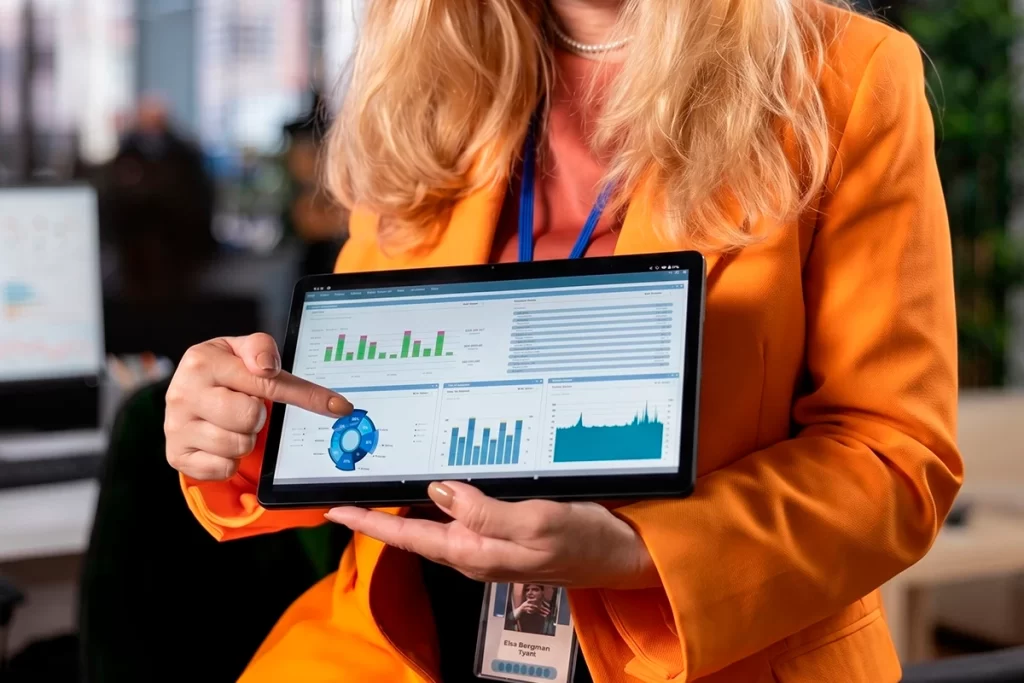
Why data analytics is the sharpest competitive edge in hospitality and real estate
In markets like Bogotá, Medellín, Miami, and Orlando, competition in hospitality, dining, and real estate is intense. The businesses winning aren’t necessarily the ones with the biggest budgets. They’re the ones making the smartest decisions with the data they have.
Data analytics levels the playing field. A boutique hotel with a smart measurement strategy can outperform a large chain that’s spending blindly. A local restaurant with a clear understanding of its customer acquisition funnel can grow steadily without depending on delivery aggregators.
The advantage isn’t in having more data. It’s in knowing which data matters and acting on it faster than your competition. That’s exactly what a specialized data analytics strategy delivers: clarity, speed, and compounding results over time.
How Digisap works as your measurement and growth partner
At Digisap, analytics work is ongoing, not a one-time setup:
- Monthly performance reviews: analyze what worked, what didn’t, and why.
- A/B testing: continuous experimentation on landing pages, ads, email subject lines, and CTAs.
- Funnel optimization: identify where potential customers are dropping off and fix it.
- KPI recalibration: as your business grows, your metrics evolve and we adjust with you.
- Transparent reporting: you always know exactly where your investment is going and what it’s generating.
Our model is built on accountability. We track the metrics that connect directly to revenue: reservations, leads, sales, not the ones that just look good in a presentation.
Explore how we help businesses like yours turn raw data into revenue. Discover our full range of digital marketing services and see what a growth partner model looks like in practice.
What hotels, restaurants and real estate businesses ask about data analytics
What is data analytics in marketing and why does it matter for my business?
Data analytics in marketing is the process of collecting, interpreting, and acting on data from your digital channels to improve performance. It matters because it replaces guesswork with evidence, helping you invest smarter, convert more, and grow faster.
How do I know if my business is ready for a data analytics strategy?
If you’re running ads, publishing content, or generating leads online, you’re already producing data. The question is whether you’re capturing and using it. Most businesses are ready. They just need the right setup and interpretation framework.
What’s the difference between GA4 and a custom dashboard?
GA4 is the data collection platform. It records what happens on your website. A custom dashboard built in Looker Studio takes that data and presents it visually, filtered for the KPIs that actually matter to your business. Both work together.
How long does it take to see results from a data analytics implementation?
Technical implementation typically takes 3 to 6 weeks. The real value compounds over time: the more data you collect and analyze, the sharper your decisions become. Most clients see measurable improvement in ROAS and conversion rates within 60 to 90 days.
Can data analytics help reduce OTA commissions for hotels?
Absolutely. By understanding exactly which marketing channels drive direct bookings, hotels can invest more in those channels: SEO, Google Ads, email marketing, and progressively reduce dependence on OTAs like Booking.com and Expedia.
Data is already flowing through your business. The question is whether you’re using it.
Every day you’re not measuring properly, you’re making decisions with incomplete information. In competitive markets like Medellín, Miami, and Bogotá, that gap costs reservations, leads, and revenue.
Data analytics in marketing isn’t a luxury for large enterprises. It’s the foundation of any sustainable growth strategy for hotels, restaurants, and real estate businesses in 2026. At Digisap, we combine technical expertise, strategic vision, and a growth partner mindset to help you build a measurement system that pays for itself.
Because when you know exactly what’s working, you stop wasting budget and start scaling with confidence.
Know our data analytics services and request a free diagnosis for your business