In a city like Medellín, where the dining scene grows every year and competition is concentrated by neighborhoods, the restaurant that wins is not the one trying to attract the entire city, but the one that dominates its immediate area. Today, the decision of where to eat starts on Google, on the map, and in increasingly specific location-based searches.
Queries such as “restaurant near me”, “where to have lunch in El Poblado”, or “restaurant for business meetings in Laureles” determine who appears, who gets the visit, and who is excluded from the decision. Local SEO and GEO strategy allow a restaurant to stop being “just another option” and become the natural reference for its zone.
Medellín does not operate as a single market. It works through micro-zones, neighborhoods, and business hubs. Understanding this is the first step toward conquering local searches with real dining intent.
Medellín as a local market: the zones that drive traffic
User behavior in Medellín is strongly influenced by location and context. People don’t search for “the best restaurant in Medellín” in abstract terms—they look for nearby and convenient options.
High-intent zones include:
- El Poblado (Milla de Oro, Provenza, Manila)
- Laureles – Estadio
- Ciudad del Río
- Envigado (border areas)
- Business districts and medical areas
Each zone has:
- Different audiences
- Distinct dining schedules
- Specific motivations (business, leisure, tourism, proximity)
Effective local SEO starts by owning one zone, not by trying to cover the entire city.
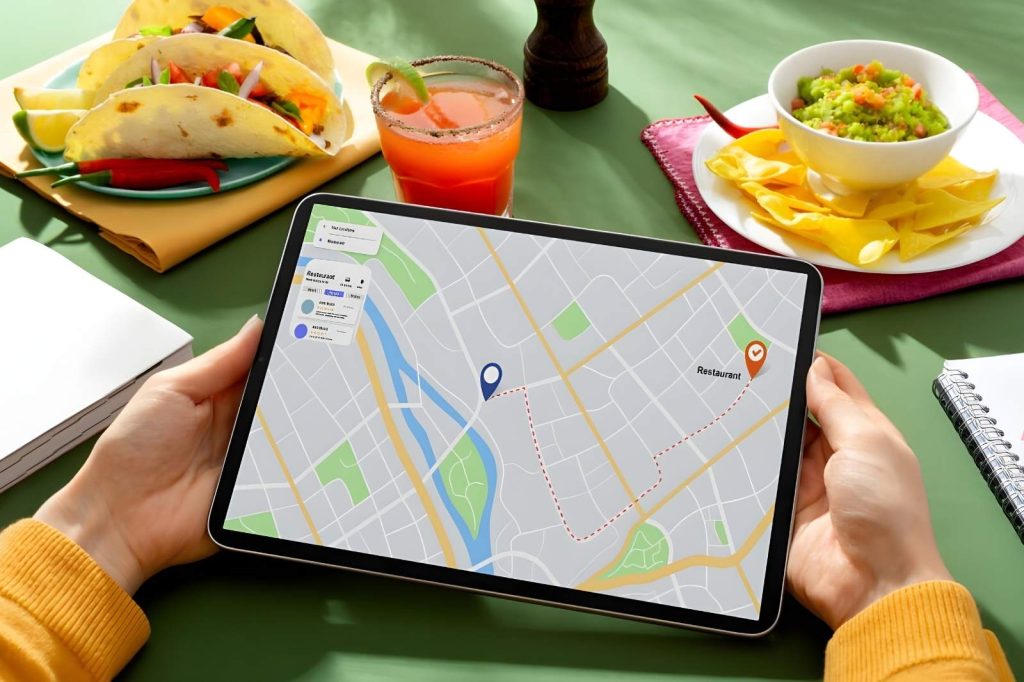
What local SEO is and what GEO is (and why they’re not the same)
Local SEO
Focuses on:
- Google Maps
- Google Business Profile
- Reviews
- NAP consistency
Its role is to make the restaurant visible when someone searches in a specific location.
GEO (Geographic Optimization)
Goes one step further:
- Zone-focused content
- Language aligned with local context
- Connection to nearby points of interest
Local SEO helps you appear.
GEO helps you become the logical choice for that area.
How to become the reference restaurant in your zone
Real optimization of Google Business Profile
Having a profile is not enough.
Key best practices:
- Accurate, non-generic category
- Description written with the zone in mind
- Real photos of the space and surroundings
- Up-to-date hours
- Strategic use of posts
A well-optimized profile improves both visibility and click-through rates from Maps.
Reviews with local intent
Reviews influence both reputation and ranking.
Key actions:
- Encourage reviews that mention the area
- Respond using local references
- Identify patterns related to location
Example:
“Great option for lunch near the Milla de Oro” performs far better than a generic review.
GEO-focused content on the website
The website must reinforce what Google Maps shows.
Effective approaches:
- Pages oriented to specific zones
- Content useful for local audiences
- Natural mentions of neighborhoods and nearby landmarks
Examples:
- Executive lunch restaurants in El Poblado
- Meeting-friendly venues in Laureles
- Dining options near business districts
This content should respond to real needs, not feel forced.
Winning priority business zones in Medellín
Business areas concentrate searches with strong weekday intent.
Keys to dominating them:
- Local SEO aligned with work schedules
- Content focused on business lunches and meetings
- Clear messaging around speed, location, and experience
Restaurants that understand this pattern achieve:
- Higher weekday occupancy
- Higher average tickets
- Stronger corporate repeat business
Local signals Google and AI systems actually understand
Both Google and AI-driven answer systems prioritize:
- Consistency between Maps, website, and reviews
- Natural language with local context
- Authority within a specific zone
Key signals include:
- Local backlinks
- Third-party mentions
- Semantic consistency
Combining local SEO with GEO improves visibility in traditional search and AI-generated responses.
Common mistakes that limit local visibility
- Trying to rank for the entire city
- Using generic descriptions
- Failing to update information
- Ignoring reviews
- Not aligning the website with the local strategy
These mistakes reduce relevance compared to more focused competitors.
Direct impact on restaurant performance
When local SEO and GEO are executed correctly:
- Google Maps visits increase
- Reservation rates improve
- Dependence on paid ads decreases
- Higher-intent customers are attracted
- Local reputation strengthens
The restaurant stops competing for generic visibility and starts owning its area.
Practical step-by-step implementation
Operational checklist:
- Define the priority zone
- Optimize Google Business Profile
- Work reviews with local intent
- Create GEO-focused website content
- Align messaging with schedules and audiences
- Measure local traffic and conversions
- Review and refine quarterly
Key metrics:
- Local search impressions
- Google Maps clicks
- Calls and reservations
- Zone-based website traffic
Strategic support from Digisap
At Digisap, we design local SEO and GEO strategies focused on dominating specific areas, not competing generically. We connect positioning, content, and data to help restaurants become the natural reference within their environment.
Schedule a personalized consultation with Digisap