Los agregadores como Rappi, Uber Eats, DoorDash o DiDi Food se convirtieron en un canal indispensable para muchos restaurantes en Bogotá, Medellín, Cartagena, Ciudad de México, Miami u Orlando. Sin embargo, también representan un riesgo cuando se convierten en el único canal relevante de ventas. Comisiones altas, pérdida de datos, dependencia extrema, baja recurrencia y márgenes reducidos son desafíos que limitan la rentabilidad y la capAggregators such as Rappi, Uber Eats, DoorDash, and DiDi Food have become an essential sales channel for many restaurants in Bogotá, Medellín, Cartagena, Mexico City, Miami, and Orlando. However, they also represent a major risk when they become the restaurant’s only relevant sales source. High commissions, loss of customer data, extreme dependency, low retention, and reduced margins are all challenges that limit profitability and growth potential.
In 2026, any restaurant aiming to scale must build its own digital ecosystem—one that includes direct sales, automation, local SEO, paid advertising, and retention. This article explains why relying solely on aggregators is unsustainable and what restaurants must do to balance their commercial strategy.
Benefits of Reducing Aggregator Dependency and Increasing Direct Sales
Better Margins Without Commissions
Aggregator commissions range from 20% to 35%. By driving direct sales, restaurants improve net margin and can reinvest in operations, staff, or marketing.
Greater Control Over the Customer Relationship
Aggregators do not share full user data. Without first-party data, restaurants cannot
:
- Build audiences
- Run remarketing
- Activate loyalty campaigns
- Measure customer lifetime value
Direct sales restore this control.
Operational and Financial Independence
Aggregators can change fees, policies, or visibility without notice. With direct channels, restaurants protect their revenue flow.
Brand Building and Differentiation
Without a strong brand, a restaurant becomes just another listing among hundreds. Direct channels strengthen brand recognition and generate recurring demand.
Why Your Restaurant Cannot Depend Solely on Aggregators in 2026
Unsustainable Commissions That Reduce Profitability
Aggregators charge significant commissions per order. For many restaurants, margin ends up depending on volume rather than efficiency.
At Digisap, our audits show that many restaurants lose more than 15% of potential profit by relying exclusively on aggregators.
Solution:
Build a hybrid model in which aggregators generate volume but direct channels generate profitability.
Lack of First-Party Data and Lost Retention Opportunities
Restaurants don’t know who their customers are, what they ordered, their purchase frequency, or their average ticket.
This limits the ability to implement:
- Loyalty programs
- Abandoned order recovery
- Upselling
- Automated communication
Solution:
Implement CRM systems, automation, and first-party data capture.
Dangerous Dependency on Algorithms and Platform Positioning
Aggregators prioritize restaurants based on:
- Higher sales volume
- Higher ad spend inside the platform
- Higher commissions
- Certain cuisine types
Without control over visibility, restaurants become vulnerable to algorithm fluctuations.
Solution:
Build visibility on Google Maps, local SEO, and social media.
The Aggregator’s Customer Is Not the Restaurant’s Customer
Users buy based on convenience, not necessarily brand affinity.
This reduces:
- Recurrence
- Average ticket
- Loyalty
- Complementary sales
Solution:
Develop brand, content, and direct communication strategies.
The Restaurant Does Not Control the Final Experience
Common issues with aggregators include:
- Incorrect delivery times
- Incomplete orders
- Courier incidents
- Poor product handling
Customers blame the restaurant—even when it is not responsible.Solution:
Strengthen direct sales with your own systems or strategic logistics partners.
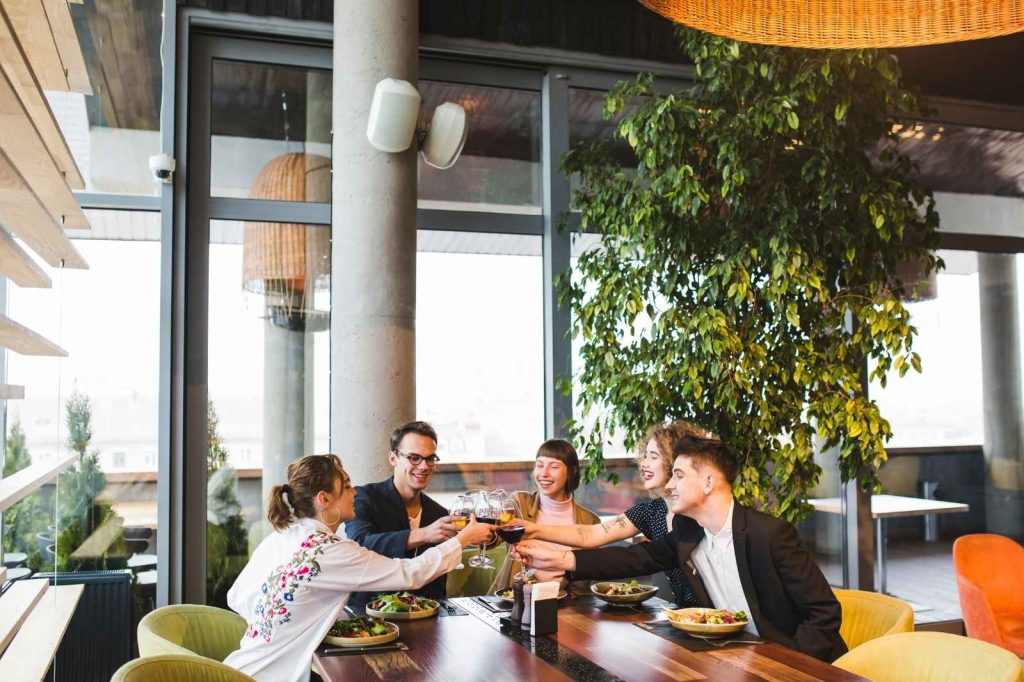
How to Build a Digital Ecosystem That Reduces Dependency and Increases Direct Sales
Local SEO to Appear in “Near Me” Food Searches
Local SEO allows restaurants to rank for searches like:
- Italian restaurant in Bogotá
- Best tacos in Mexico City
- Sushi near me
- Brunch in Miami Beach
Key actions:
- Create local content
- Optimize menu pages
- Basic technical SEO
- Publish reviews and updated photos
- Optimize the website for mobile
Google Maps as a Direct Discovery Channel
2026 will be the year of geolocated SEO for restaurants.
Recommended actions:
- Updated professional photos
- Optimized digital menus
- Weekly posts
- Strategic review management
- Accurate hours and location information
Typical results for restaurants that execute well:
- 30% to 60% increase in direct calls from Maps
- Growth in clicks to reservations or digital menus
Social Media as a Driver of Discovery and Retention
Social media should showcase:
- Experiences
- Cuisine
- Team
- Process
- Differentiators
Key actions:
- Short-form videos
- Geolocated content
- Campaigns by customer segment
- Featured menu highlights
Social media does not close the sale—but it generates brand demand.
Paid Ads Focused on Real Intent
Paid media should not chase superficial reach but intent.
Effective options:
- Neighborhood-based promotions
- Last-minute campaigns
- Retargeting for users who viewed the menu
- Campaigns focused on reservations or direct orders
Expected results:
- Lower CPA
- Higher conversions on direct channels
Automation: The Engine of Recurrence
Direct sales are only sustainable with retention.
Recommended systems:
- Abandoned order recovery
- Welcome sequences
- Segmented promotions by ticket and frequency
- Automated messages for special dates
A restaurant with active automation can increase revenue by 12% to 25%.
Real Use Cases in LATAM and the U.S.
Fusion Cuisine Restaurant in Bogotá
Before: 85% dependency on aggregators.
Actions: Local SEO, Google Maps, intent-based ads.
Results:
- +46% direct orders
- +32% new recurring customers
- Savings equivalent to 18% of monthly revenue
Mediterranean Restaurant in Medellín
Actions: Menu content, automation, local campaigns.
Results:
- Higher average ticket on direct orders
- +40% branded searches
- +52% clicks from Maps
Taquería in Mexico City
Actions: Neighborhood campaigns and mobile optimization.
Results:
- CPA reduced by 27%
- +38% direct orders
- +59% follower growth with local audience focus
Restaurant in Miami Beach
Actions: Tourist-focused ads + experience-driven SEO.
Results:
- +41% organic traffic
- +23% direct reservations
- Clear improvement in local positioning
Digital Independence as a Competitive Advantage in 2026
Restaurants that rely solely on aggregators face structural limitations in margin and growth. On the other hand, a self-owned ecosystem enables:
- Full control of the customer
- Higher profitability
- Sustainable growth
- Stronger brand differentiation
- Consistent recurrence
- Data-driven decisions
2026 will be the year when restaurants with strong digital strategy outperform those dependent exclusively on platforms.
Support, Measurement, and Continuous Optimization with Digisap
Digisap’s Growth Partner model includes:
- Full digital channel audit
- Local SEO for restaurants
- Content and social media strategy
- Paid campaigns by neighborhood and intent
- Automation for retention
- Data dashboards with real metrics
- Continuous optimization
The goal is simple: more direct sales, better margins, and less dependency on aggregators.
Request a Personalized Consultation for Your Restaurant
Learn how Digisap can help you balance your commercial strategy and increase direct sales in 2026:
https://digisap.com/
Frequently Asked Questions
Is it possible to reduce aggregator dependency without losing sales?
Yes. The key is generating your own visibility and retaining customers.
How long does it take to see results?
Between 60 and 120 days, depending on competition and execution.
Should aggregators be eliminated?
No. They should remain as one channel—but not the main one.
Can the real impact of direct sales be measured?
Yes. With the right tools, every sale can be attributed to its channel.
Does Digisap work with restaurant-specific strategies?
Yes. We have specialized methodologies for hotels, restaurants, and real estate.
Depending solely on aggregators in 2026 limits restaurant profitability and growth.
The key is to build your own digital ecosystem based on local SEO, Google Maps, social media, automation, and strategic paid media.
Restaurants that invest in their brand and direct channels achieve independence, higher margin, and sustained growth. With Digisap, this transition becomes structured, measurable, and profitable.
Transform your restaurant’s digital strategy and increase your direct sales.
Book a personalized consultation with Digisap → https://digisap.com/