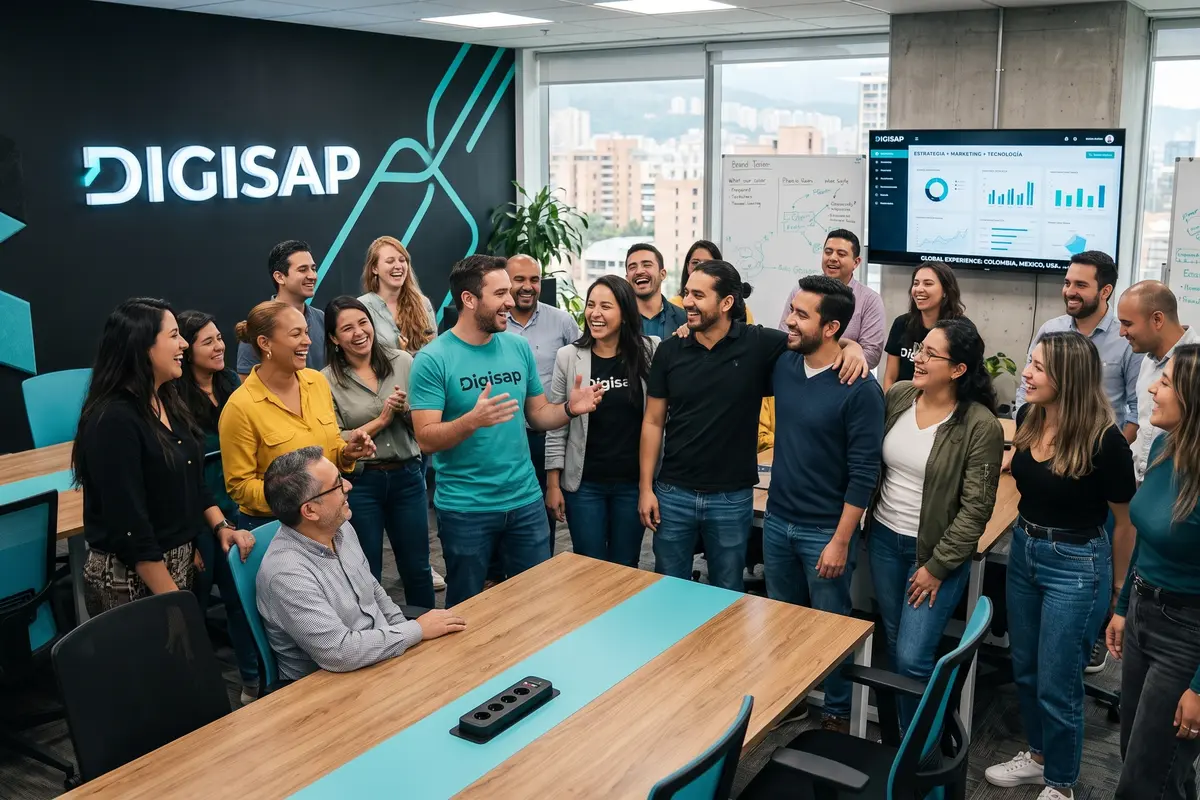
For years, hiring digital marketing meant asking for "a campaign": a package of posts, some paid ads, maybe a website redesign. The deliverable was the unit of measure. That way of working falls short today for any business that depends on real outcomes, sales, bookings or qualified leads, not marketing activity.
Our service structure evolved to reflect that shift.
From 'running campaigns' to building growth
The problem with treating digital marketing as a series of isolated campaigns is that each one gets optimized on its own, without considering how it affects the rest of the funnel. You can have a Meta Ads campaign with excellent reach, while the website receiving that traffic isn't built to convert, or the sales team has no clear process to follow up on the leads coming in.
A growth model thinks differently: it starts from the business objective, more direct bookings, more sales, more qualified leads, and works backward, defining which combination of services that specific objective needs. Sometimes the priority is SEO, sometimes it's fixing site conversion before spending more on ads, sometimes it's aligning marketing and sales so no lead gets lost.
Services by vertical
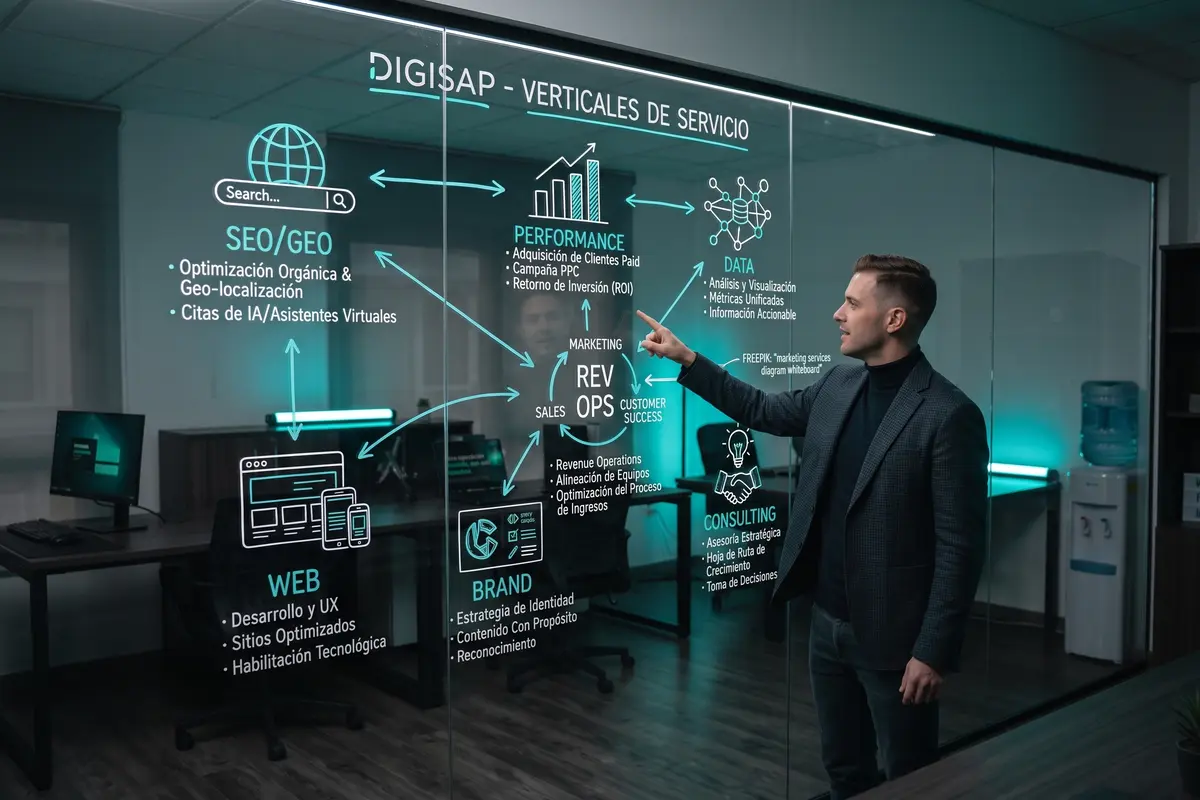
We reorganized our services into seven verticals, each solving a different part of the growth cycle:
SEO/GEO
Traditional organic search positioning on engines like Google, combined with optimization for AI-driven search. More people are asking AI assistants direct questions before searching Google, and content needs to be structured to answer there too, not just to rank in the traditional top ten results.
Performance
Paid media on Google Ads and Meta Ads, measured by ROAS and real acquisition cost, not reach or impressions. Includes audience segmentation, campaign structure and continuous optimization based on each channel's real performance.
Data
Dashboards and attribution models that connect marketing investment with business outcomes. Without this piece, it's impossible to know with certainty which channel is actually generating sales and which one is just consuming budget.
Web
Development of sites and platforms built to convert visitors into leads or sales, not just to look good. A slow site, long forms, or an unclear message can undo the work of every other vertical.
Brand
Brand building and differentiated positioning within each industry. In markets as competitive as hospitality or real estate, brand is what makes a business memorable after a buyer compares ten similar options.
Consulting
Strategic guidance for businesses that need direction before execution. Not every client arrives with clarity on which channel to prioritize or how to structure their internal marketing team, and this vertical covers that earlier stage.
RevOps
Alignment between marketing, sales and operations so no lead falls through the cracks. Generating hundreds of qualified leads matters little if the internal sales process doesn't have the capacity or structure to follow up on time.
Why an integrated model sells more
When these seven verticals work in isolation, each one optimizes its own metric without considering the effect on the others. SEO can bring in quality traffic that gets lost because the site doesn't convert. Performance can generate leads that go cold because there's no RevOps process managing them on time. Brand can build awareness that never translates into sales because there's no data connecting that visibility to business outcomes.
An integrated model prevents that leak. Decisions get made looking at the customer's full journey, from first contact to close, and budget shifts toward whatever the data shows is generating the most return, instead of being split evenly across channels that aren't talking to each other.
This is the same logic behind the long-term results we've seen with clients like Irotama Hotel or PFS Realty Group: it wasn't a single campaign, it was the coordinated combination of several verticals working toward the same goal over years.
Frequently asked questions
What digital marketing services does Digisap offer?
Seven integrated verticals: SEO/GEO, performance (paid media), data (dashboards and attribution), web development, brand, strategic consulting, and RevOps to align marketing and sales.
What is a service model organized by vertical?
It's a way of structuring digital marketing work around the specific function each discipline serves within business growth, instead of selling them as isolated tactic packages.
Can I hire a single service or the full integrated model?
Both options are available. Many clients start with a single vertical based on their most urgent need, and add others as the business requires. The integrated model tends to deliver better results over the medium term because the verticals reinforce each other.
Explore our services
If your business needs a digital marketing strategy built by vertical instead of loose tactics, explore each of Digisap's services in detail and review our case studies before deciding where to start.