A hotel doesn't sell like a restaurant, and a real estate firm doesn't capture customers like an online store. Digital marketing by industry starts from that simple truth: every sector has a different customer, a different buying cycle, and different channels, and the strategy has to adapt to that in order to sell more. Here's why specialization makes the difference, and what actually changes from one sector to another.
Why generic marketing doesn't work
A generic agency applies the same formula to everyone: the same campaigns, the same messaging, the same success metrics. The result tends to be mediocre, because it ignores what makes each business unique.
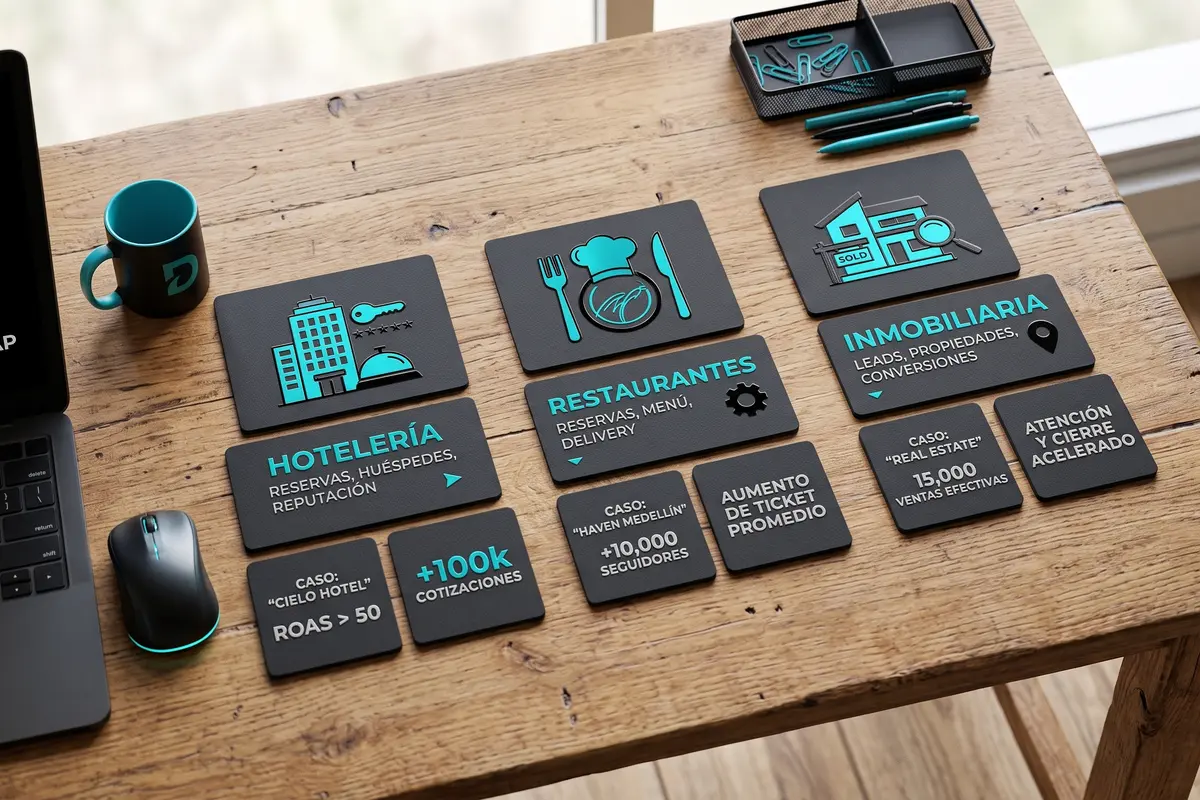
A hotel needs direct bookings and less dependence on OTAs. A restaurant needs to fill tables on weekdays, when natural demand drops. A real estate firm needs leads who actually intend to buy, not just curious browsers comparing prices. Treating those three challenges with the same strategy is the fastest way to waste budget, because what works to capture immediate buying intent in real estate doesn't work the same way to drive weekday foot traffic to a restaurant.
The deeper problem with generic marketing isn't just that it ignores the sector, it ignores the exact point in the decision cycle where the customer is when they first encounter the brand. A traveler searching for a hotel has already decided the destination and is comparing concrete options. A diner searching for a restaurant decides almost instantly, based on whatever shows up first on Google Maps. A property buyer might take months to decide. Each one needs a completely different type of content and offer.
How the strategy changes by sector
Hotels
The focus is increasing direct bookings and reducing dependence on Booking and Expedia. That involves:
- Hotel SEO focused on high booking-intent search terms
- Campaigns aimed at travelers who've already decided on the destination
- A booking engine that doesn't lose the user during checkout
- ROAS measurement on the direct channel, compared against the commission cost charged by OTAs
Restaurants
Here, local dominates. The strategy is built around:
- Local SEO and an optimized Google Maps presence
- Active review management, since poor online reputation translates directly into fewer bookings
- Campaigns that attract diners from the actual area, not generic traffic with no intent to visit
- Content focused on filling tables on weekdays, usually the weakest point in occupancy
Real estate
The main challenge is lead quality, not volume. This requires:
- Fine segmentation between investors and end-users looking for a home
- Content that educates the buyer through a sales cycle that can take months
- CRM and nurturing so no prospect goes cold while deciding
- Specific strategies to reach investors even from abroad
E-commerce
The goal is profitability per sale, not just traffic volume:
- SEO focused on product pages and purchase-intent searches
- Advertising segmented by purchase behavior
- Conversion rate optimization (CRO) at every step of checkout
- Cart abandonment recovery strategies
B2B
Sales cycles are long and decisions usually involve multiple people within the buying company:
- Qualified lead generation with technical or educational content
- Authority content that builds trust before the first sales conversation
- Automation to shorten the time between first contact and a sales conversation
- Nurturing adapted to decision cycles that can take months
What your business gains with a specialized approach
When the agency already understands your sector, you don't spend months explaining your business or paying for its learning curve out of your ad budget. Campaigns start from what we already know works in your industry, messaging connects with your real customer from the first ad, and the metrics being tracked are the ones that actually matter for your type of business, not a generic reach-and-impressions report.
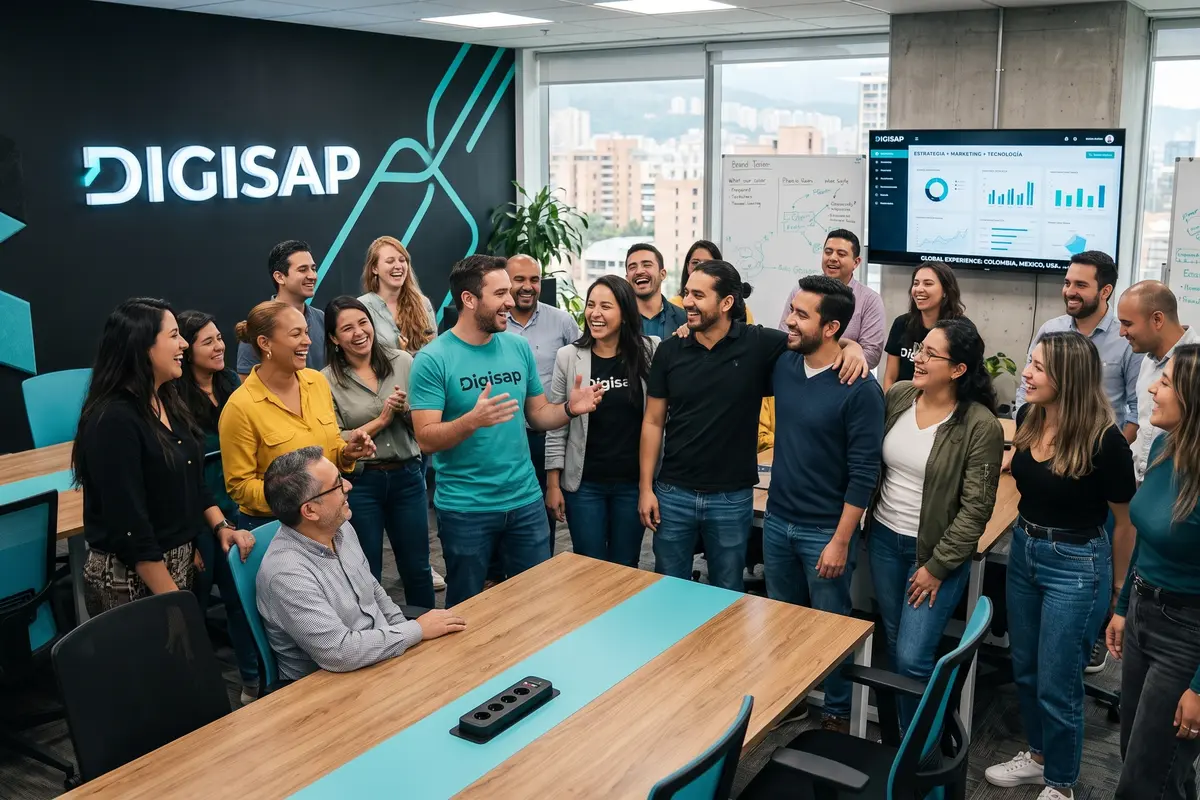
At Digisap, we've spent 19 years, since 2007, specializing in hotels, restaurants, real estate and e-commerce. That accumulated experience means we speak your language from the first meeting: we already know what questions to ask, what industry benchmarks are reasonable, and what mistakes to avoid because we've already seen them fail with other clients in the same sector.
That specialization is the same reason cases like Irotama Hotel, El Cielo or PFS Realty Group achieved sustained results over time: we didn't start from zero understanding the business, we started from years of prior work in that exact type of industry.
Frequently asked questions
Why do I need industry-specialized marketing?
Because every sector has a different customer, buying cycle and set of channels. A tailored strategy converts more and wastes less budget than a generic one applied equally across any business.
Which sectors does Digisap work with?
Hotels, restaurants, real estate, e-commerce and B2B, across Colombia and the United States.
How is it different from a generic agency?
We don't learn your business at your expense. We start from accumulated experience in your specific industry, with benchmarks, messaging and strategies we already know work in that sector.
Find your industry
Choose your sector and discover how a strategy built around your business can drive real growth. Also review our case studies by industry before deciding.