Online travel agencies give hotels reach in markets they could never cover alone. The cost shows up on every booking: commissions that typically run 15% to 25%, less control over rates and guest data that stays with the platform. When most of your occupancy depends on them, a third party sets your margins.
Reducing that dependency is a realistic goal for boutique, urban and resort hotels. The aim is for OTAs to act as a supporting channel while the direct channel carries a growing share of sales. These are the five approaches that have delivered the strongest results in the hotel marketing strategy we run at Digisap, backed by data from real case studies.
Before you start: measure how much each channel sells
No strategy works if you don’t know where your bookings come from and how much revenue each one brings in. Many hotels know their total occupancy but can’t separate what came through the website, WhatsApp, phone calls or each OTA.
Start by aligning your analytics with your booking system, so each channel is judged on revenue, not just visits. Sales closed over WhatsApp or at the front desk count too: at El Cielo Hotel, front desk logs were set up to record those sales, which had been invisible before. With that baseline in place, each of the five approaches can be measured.
1. A website and booking engine that convert
The direct channel starts on your website. If it loads slowly, hides rates or the booking engine demands too many steps, guests end up booking on an OTA even after searching for your brand.
Check three things:
- Technical visibility: your site should be indexed, with nothing blocking search engines.
- Integrated booking engine: it should feel like part of the site, work well on mobile and show the final price with no surprises.
- Reasons to book direct: clear perks such as included breakfast, flexible check-out or a welcome amenity.
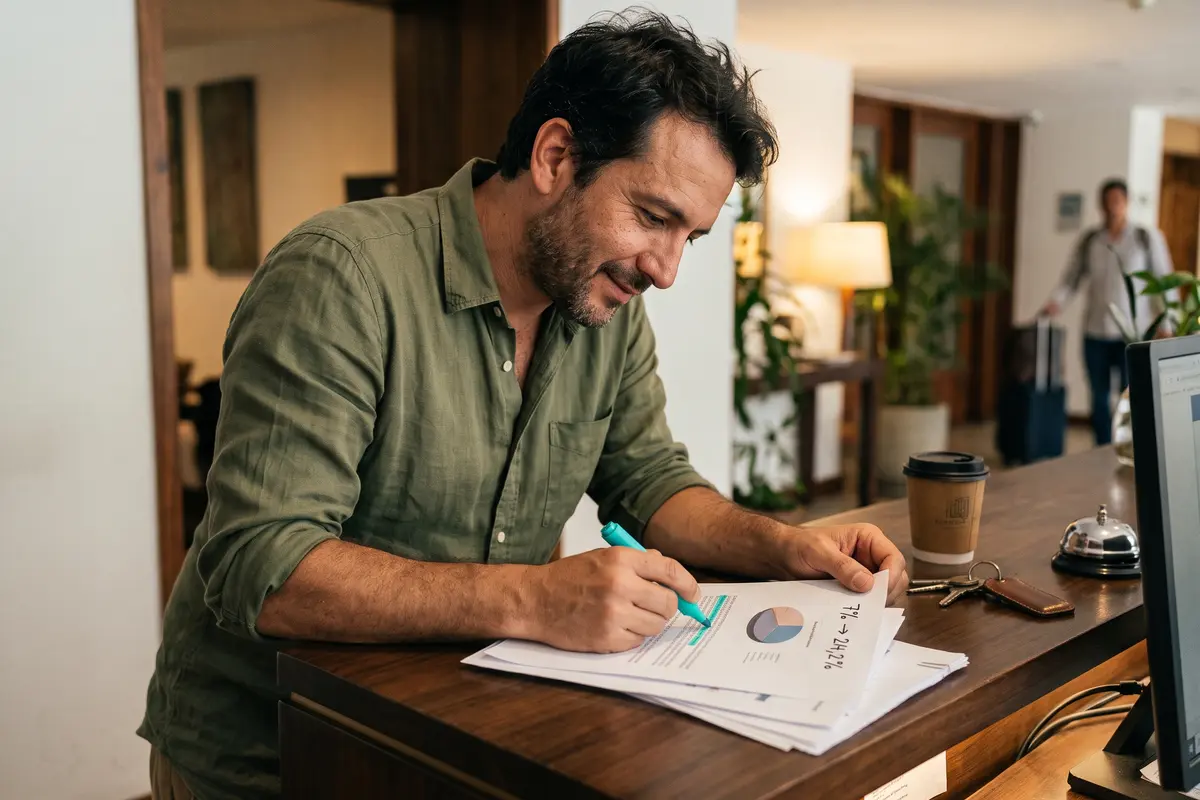
El Cielo Hotel, a luxury hotel in Medellín, started with a site blocked from search engines and an almost complete dependence on OTAs. After a redesign with built-in technical SEO and full measurement, the booking engine’s share of reservations rose from 7% to 24.2%, and the direct channel reached 32% of bookings.
2. Local SEO to capture travelers who are already searching
Before opening an OTA, many travelers search Google for “hotel in El Poblado”, “hotel near the old city” or “wedding hotel in Medellín”. If your hotel shows up for those searches with complete information, the booking can stay on your website.
- Optimize your Google Business Profile with current photos, amenities, review replies and a link to your booking engine.
- Build pages around search intent: trip type, events, location or source market.
- Write for people about to book, with useful information on the area, transportation and the guest experience.
At Binn Hotel in Medellín, we built content and pages around existing demand from markets such as Miami, Houston, New York and Bogotá, and opened a weddings and events segment. Organic users grew 80% from January to July 2026 compared with the same period in 2025.
3. GEO: get AI to recommend your hotel
More and more travelers ask ChatGPT, Gemini or Perplexity where to stay. These assistants name only a few hotels and cite the sources they trust. GEO (generative engine optimization) aims to make your hotel one of those sources.
The work combines consistent hotel details across every platform, structured content that answers specific questions and a presence in the guides and reviews assistants consult. At Hotel Regatta Cartagena, treating AI assistants as their own channel from day one made it possible to track 120 sessions from them in a single quarter, 110 of them from ChatGPT.
4. Paid media focused on confirmed bookings
Digital advertising can win back bookings that currently go to OTAs, as long as it is optimized for real sales. A campaign measured on clicks or impressions can spend heavily and fill few rooms.
- Set the confirmed booking in your engine as the primary campaign goal.
- Track calls and WhatsApp clicks as well, since in hospitality they are real conversions.
- Shift budget ahead of low seasons and scale in markets your SEO has already validated.
At Hotel Regatta we restructured Google Ads around the confirmed booking as the only bidding goal. From August to October 2026, web bookings from Google Ads grew 76% compared with the same months in 2025, on 30% less ad spend.
5. CRM and a direct relationship with your guests
Every guest who booked through an OTA is a chance to make the next booking direct. To get there, you need their details and a reason for them to come back to you.
- Capture guest data during the stay and connect it to a CRM.
- Segment by trip type, source market and dates to send relevant messages.
- Use WhatsApp as a sales channel, with fast replies and follow-up.
- Build loyalty through experience and service instead of discounts.
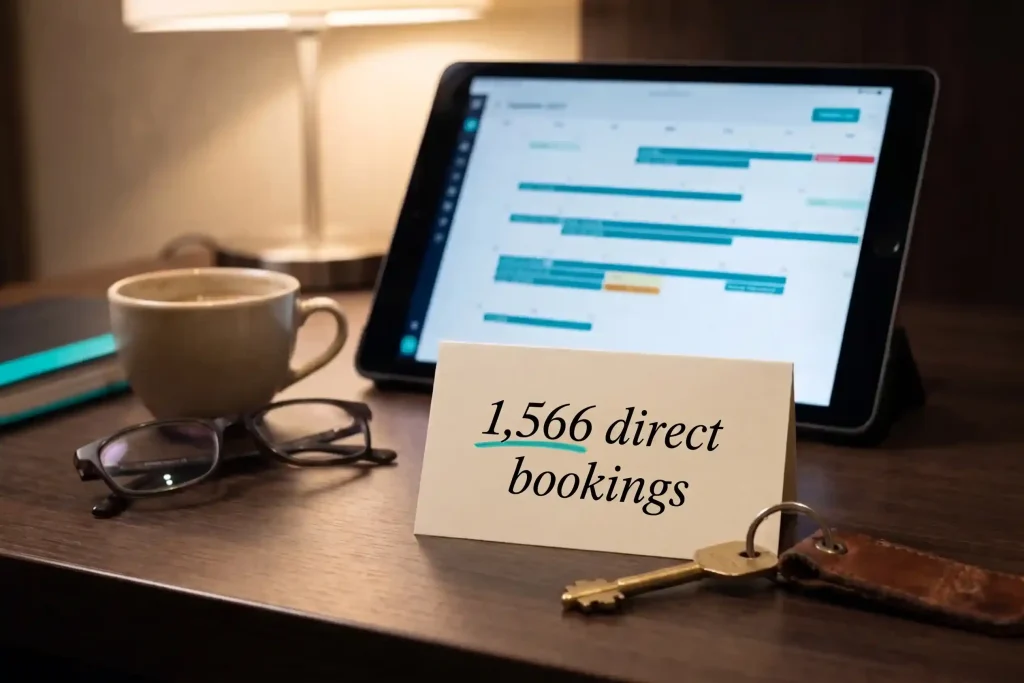
Binn shows how this plays out. Rebuilding three years of bookings revealed that 92% of 2024 reservations closed without any discount code, so the strategy focused on value over price. The result: 1,566 direct bookings without a discount code from 2024 through June 2026, and direct revenue up 38.5% from January to June 2026 compared with the same period in 2025.
Mistakes that keep hotels tied to OTAs
- Switching off OTAs overnight: occupancy drops before the direct channel is ready to make up the difference. The shift should be gradual.
- Competing on price alone: undercutting OTA rates on your site can breach rate parity agreements and erode margins. Exclusive perks tend to work better.
- Measuring sessions instead of revenue: a channel with lots of traffic and few sales looks successful in the wrong report.
- Ignoring WhatsApp and phone sales: if they go unrecorded, the direct channel looks smaller than it really is.
- Keeping marketing and front desk apart: your staff are the first point of contact with guests and should know how to invite the next direct booking.
Frequently asked questions
Can a hotel stop working with OTAs entirely?
For most hotels, it isn’t advisable. OTAs bring visibility in distant markets and help fill hard-to-sell dates. The goal is to rebalance your channel mix so direct bookings grow and the hotel recovers margin and guest data.
How long does it take to grow the direct channel?
Technical and tracking fixes show results within weeks. SEO, GEO and loyalty need several months of steady work. At El Cielo Hotel, sales doubled in the first three months of the strategy, though every hotel starts from a different place.
Should I offer a lower rate on my website than on OTAs?
Check your parity agreements first. In many cases, perks for booking direct, such as upgrades, breakfast or flexible cancellation, work better than a lower price.
Which channel should I work on first?
Tracking and your website. Without a channel baseline and a booking engine that converts, the traffic your SEO or ads generate will be lost at the final step.
Talk to a hotel marketing expert
At Digisap we analyze your channel mix, identify which bookings are slipping to OTAs and build a plan to recover margin through your direct channel. Talk to an expert.