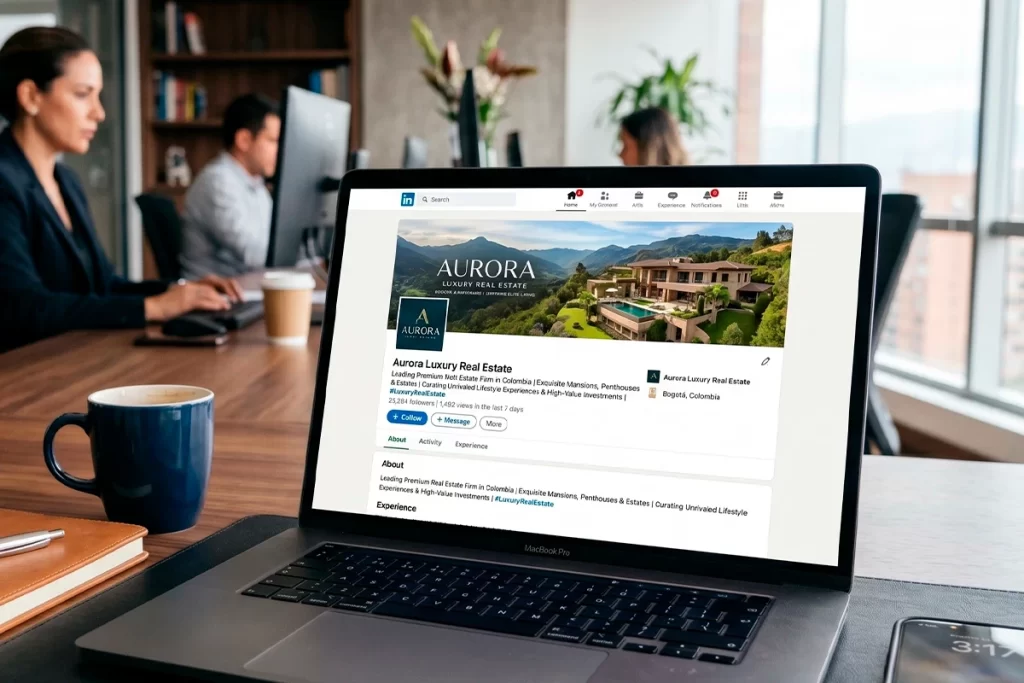



The real estate market in Miami and other areas of Florida is highly competitive, making it crucial to have a customer relationship management system (CRM) to maximize lead tracking effectiveness and close more sales. Implementing a proper CRM enables real estate to automate processes, improve data organization, and deliver a more personalized and efficient customer experience. In this guide, we will address how to integrate a CRM into the sales and marketing strategy of a real estate agency in Miami, detailing its benefits, implementation steps and best practices to maximize lead tracking.
TL;DR
- A CRM organizes a real estate firm’s leads and keeps opportunities from slipping away.
- Implementation has five steps: selection, integration, training, follow-up and measurement.
- The key is connecting the CRM with the website, portals and campaigns.
- In Florida, Florida Home Group grew organic traffic 2,872%.
Understanding the problem: The need for a CRM in the real estate sector of Miami
The real estate in Miami must manage a high volume of leads, coming from both local and international buyers. The lack of an organized system for the follow-up of these leads can lead to lost opportunities and an increase in the closing time of sales. The implementation of a CRM facilitates automated tracking, improves conversion, and allows more accurate analysis of the performance of marketing campaigns.
Breaking down the solution: Steps to integrate a CRM in Florida Real Estate
To effectively integrate a CRM into your sales and marketing strategy, it is essential to follow a step-by-step approach that ensures system optimization and maximize your benefits:
- Selection of proper CRM
- needs assessment:
- Before selecting a CRM, the real estate company must clearly define its needs, such as lead management capacity, process automation, integrations with other platforms (Google Ads, Facebook Ads, Email Marketing), and data analytics capabilities.
- CRM options for real estate:
- Some of the most recommended CRMs for real estate include Salesforce, HubSpot, Zoho CRM, and Follow Up Boss, each with specific features for the real estate sector, such as property tracking, sales automation, and transaction management.
- Adaptation to the Miami market:
- The CRM must be able to manage international leads, which means including features such as multi-language management, WhatsApp integration and automation of personalized answers for international buyers.
- needs assessment:
- CRM configuration and integration
- Integration with the website and marketing platforms:
- It is essential to integrate the CRM with the real estate website, allowing automatic leads capture through forms, chatbots and other conversion tools. This ensures that all leads are automatically registered in the system, preventing the loss of information.
- Integrating CRM with digital marketing platforms such as Google Ads, Facebook Ads, and email marketing platforms allows for smooth data synchronization, facilitating lead conversion tracking from the first interaction to the closing of the sale.
- Process automation:
- Configure automated workflows in the CRM that include automatic responses to new leads, tracking reminders for sales agents, and alerts when a lead reaches a high level of interest (for example, after viewing a specific property multiple times on the web).
- Implement automated email marketing sequences (Drip Campaigns) to continuously nurture leads, providing valuable information such as property purchase guides in Miami, return investment analysis and updates to new properties.
- Integration with the website and marketing platforms:
- Sales and marketing team training
- Training in the use of CRM:
- Provide complete training to the sales and marketing team to make sure they understand how to use CRM effectively. This includes the creation of lead profiles, the use of tracking automations, and the generation of performance reports.
- Integration of sales techniques in the CRM:
- Teach the team to use CRM to customize the sales process. For example, use interaction notes to record property preferences, details of conversations with leads, and stages of the purchase process, allowing more accurate and effective tracking.
- Training in the use of CRM:
- Lead tracking optimization
- Segmentation of leads in the CRM:
- Classify and segment leads in the CRM according to specific criteria, such as level of interest, desired type of property (mansion, penthouse, condominium, etc.), and preferred location (Miami Beach, Brickell, Coral Gables, etc.). This segmentation allows the sales team to prioritize the most qualified leads and focus their efforts on the most promising opportunities.
- Lead Scoring:
- Implement a lead scoring system (lead scoring) that evaluates the level of interest of buyers according to their behavior on the web, interaction with emails and responses to calls or messages. Higher-scored leads should receive more attention from the sales team, which increases the probability of conversion.
- Automation of reminders and tasks:
- The CRM must be configured to send automatic reminders to sales agents about pending tracking, scheduled appointments, and tasks related to the sales process, ensuring timely and effective tracking of each lead.
- Segmentation of leads in the CRM:
- Measurement and analysis of results
- Use of custom dashboards:
- Configure custom dashboards in the CRM to monitor key KPIs, such as the number of leads generated, conversion rate, average sales closing time, and return on investment (ROI) of marketing campaigns.
- Continuous analysis:
- Perform regular analysis of CRM data to identify trends in leads behavior, adjust marketing strategies, and optimize the sales approach based on the results obtained.
- Team Performance Reports:
- Generate performance reports to evaluate the efficiency of the sales team, identifying areas for improvement and opportunities for additional training.
- Use of custom dashboards:
| Step | What to do |
|---|---|
| 1. CRM selection | Choose a tool that fits the team size and process |
| 2. Setup and integration | Connect the CRM with the website, portals and campaigns |
| 3. Team training | Train sales and marketing for daily use |
| 4. Lead follow-up | Automate reminders, alerts and assignments |
| 5. Measurement | Review conversion by stage and closing times |
Hypothetical example and real results in Florida
Imagine a real estate firm in Coral Gables that receives leads from its website, portals and social media but tracks them in spreadsheets. In that case, a CRM integrated with the site and campaigns would let it assign each lead, schedule follow-ups and see what stage each buyer is in. This example is illustrative: the result depends on the team, the lead volume and the execution.
As proof of real results in the Florida market, our documented case is Florida Home Group: between May 2025 and May 2026 its organic traffic grew 2,872% (from 116 to 3,448 users) and 186 pages of the site were cited by AI engines. See the Florida Home Group case.
Benefits of implementing a CRM in Florida Real Estate
- Greater efficiency in lead tracking:
- The CRM automates the tracking process, ensuring that leads are served in a timely manner and reducing the risk of losing sales opportunities.
- Conversion rate improvement:
- By allowing more accurate and customized tracking, the CRM improves the conversion rate, increasing the likelihood of closing luxury property sales.
- More accurate data analysis:
- Data collection through CRM enables more accurate analysis of marketing campaign performance and sales strategies, making informed decision making easier.
- Sales process optimization:
- The CRM provides a complete view of the sales pipeline, allowing agents to prioritize leads, manage tasks more efficiently, and improve the customer experience.
Implementing a CRM in Miami Real Estate is essential to improve lead tracking, increase the conversion rate, and optimize sales and marketing strategies. By choosing the right CRM, setting it up correctly, and integrating sales automations, real estate companies can ensure a more efficient, customer-focused process, resulting in more sales closings and a higher return on investment. Adapting this tool to the specific needs of the luxury real estate market in Miami will guarantee its success and relevance in a highly competitive sector.